Kids See Ghosts\Kizzu Wa Tokidoki Yūrei o Miru
Y’all can’t move me.

My fascination with Japan began over an early 90's summer; when my older brother returned home from a tour as an F-18 pilot and C-130 engineer for the United States Navy.
After three steps in the front door, he set two rucksacks on the floor before hugging my mother hello. One rucksack had attached to it a white rectangular tag, bearing a cherry red orb at its center.
Settled in for a week, eventually he called me to his room and pulled various cloth bundles from the mystery bag from days before. He unrolled the first, and dozens of VHS boxes bearing the word 'MACROSS' spilled from it. Another he unrolled the next with more finesse, pulling back the last layer to reveal a black katana, cobalt wakizashi, and a plethora of shurikens I of course was eternally banned from touching.
By that summer's end, the culture of Japan had inflexibly rooted itself in my mind as a place to experience in person.
+++
Fast forward through two decades, and what started as a simple and shared American fascination with all things ninja in the 90's morphed to more pressing contemplation. More important to me was the concept of quietude; living among others peacefully, quietly, efficiently and cleanly. I had many questions about Japan that I hoped would be answered in our 12 days in the East.
-Where did the seemingly parallel relationship found in my culture as an African American come from?
-How do we exist as both poets and warriors in an age where it seems as if we're unsure of if either should exist?
-What connects our cultures in regards to our daily routines, and opposite that, what makes it feel so enigmatic to be in Japan?
Before we went to Japan in the Fall of 2017, I did my best not to hype my mind up on all the stories of mystery and intrigue built up by years of what I've seen through a handful of mediums. Fortunately, it surpassed all the dreams and hype I could have ever mustered.
Two weeks isn't enough to solve all of ones internal mysteries in the Land of the Rising Sun, but let me walk you through its ancient light from my perspective... and before I get ahead of myself, let's talk about getting there in the first place….oh and if you’re a fan of music, I built a playlist that helped organize everything I saw in my mind. This paper is named after the song ‘Kids See Ghosts’ because of the collaboration between the G.O.O.D. Music family, and artist Takashi Murakami for the album of the same name’s cover art. Visually and lyrically, the song mirrored many of my own thoughts that seemed as inquisitive as Kid Cudi’s verse.
I built a playlist of songs that I listened to while trekking through the country, and should you make your way there, you’ll likely be inspired to do the same. It feels like walking through endless movie scenes, so why not score it?
|Getting to Japan|
The checklist for traveling to Japan is short, but critical if travelling from the United States. Tickets are likely upward of $900 unless you come across a solid deal on sites like Scott's Cheap Flights.
You've probably heard about the efficient and fast trains of Japan, but not about how to get tickets to said greatness. Japan's rail systems are owned by several companies, with the most crucial to your trip (assuming Tokyo isn't your only stop) being Japan Railways Group. It works with just about all lines in Japan, with a handful of exceptions. You can purchase a pass for the lines that Japan Railways Group operates on called a JR Pass that will grant unlimited usage of the railways, including the Shinkansen 700 bullet train in-between major cities.
Most importantly, you must buy your JR Pass BEFORE you get to Japan, so give yourself at least a month to order and receive yours by mail. There are several sites to purchase one, and we went with the 7 Day pass you can find here.
The pass timer starts after you use it the first time, so if you plan on being in Tokyo for a few days before making you way to say, Kyoto, wait until the train to Kyoto to activate your JR Pass. It will be cheaper in the long run to simply pay the normal fare while in Tokyo to get around, and save your pass for the long, expensive major city to major city rides.

‘Flying Into Tokyo’ by Magnetic Man | Narita International Airport, Arrivals.
|TOKYO|
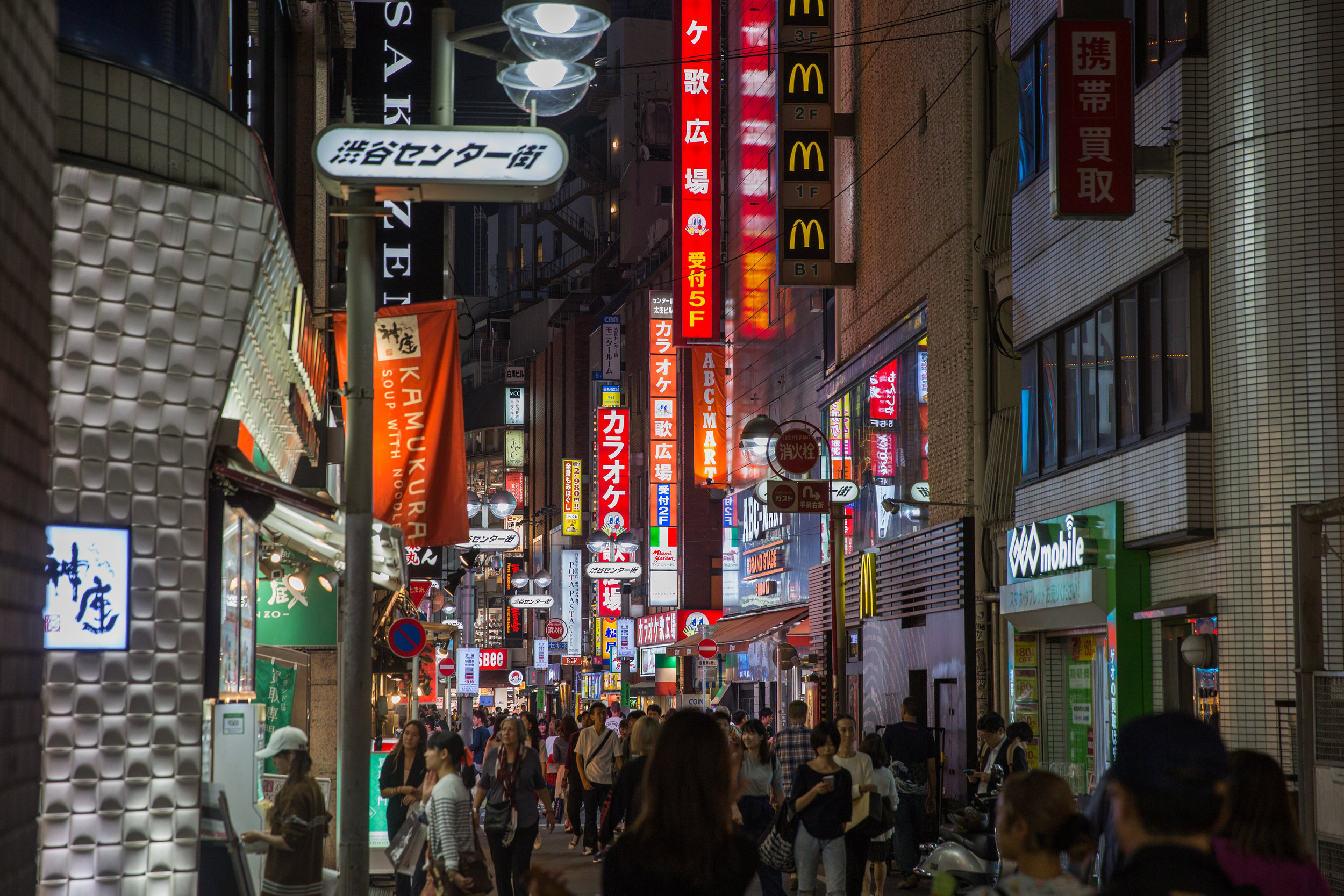
The first of three legs of travel in Japan took place in Tokyo, with the Tobu Hotel serving as our base of operations in the city. Yoyogi Park is a few minutes away on foot, with fabled Shibuya crossing not far away either to lead to the city’s sprawling train system.

‘Sweet’ by Little Dragon | Starbucks next to Shibuya crossing has an excellent selection of matcha flavored treats with balcony views to match.

Shibuya Crossing. Stopping wasn’t an option.
After strolling through the streets of Shibuya and eventually figuring out the rail system maps, we headed North East to Ueno. Home to Ueno Zoo, Onshi Park, and the Tokyo National Museum; you’ll easily be able to spend a half a day at least exploring. Many visitors come here in the Spring due to the high amount of Cherry blossoms that bloom here every year.

Crusing through Ueno Park.

New signage is installed near the entrance to Ueno Zoo.
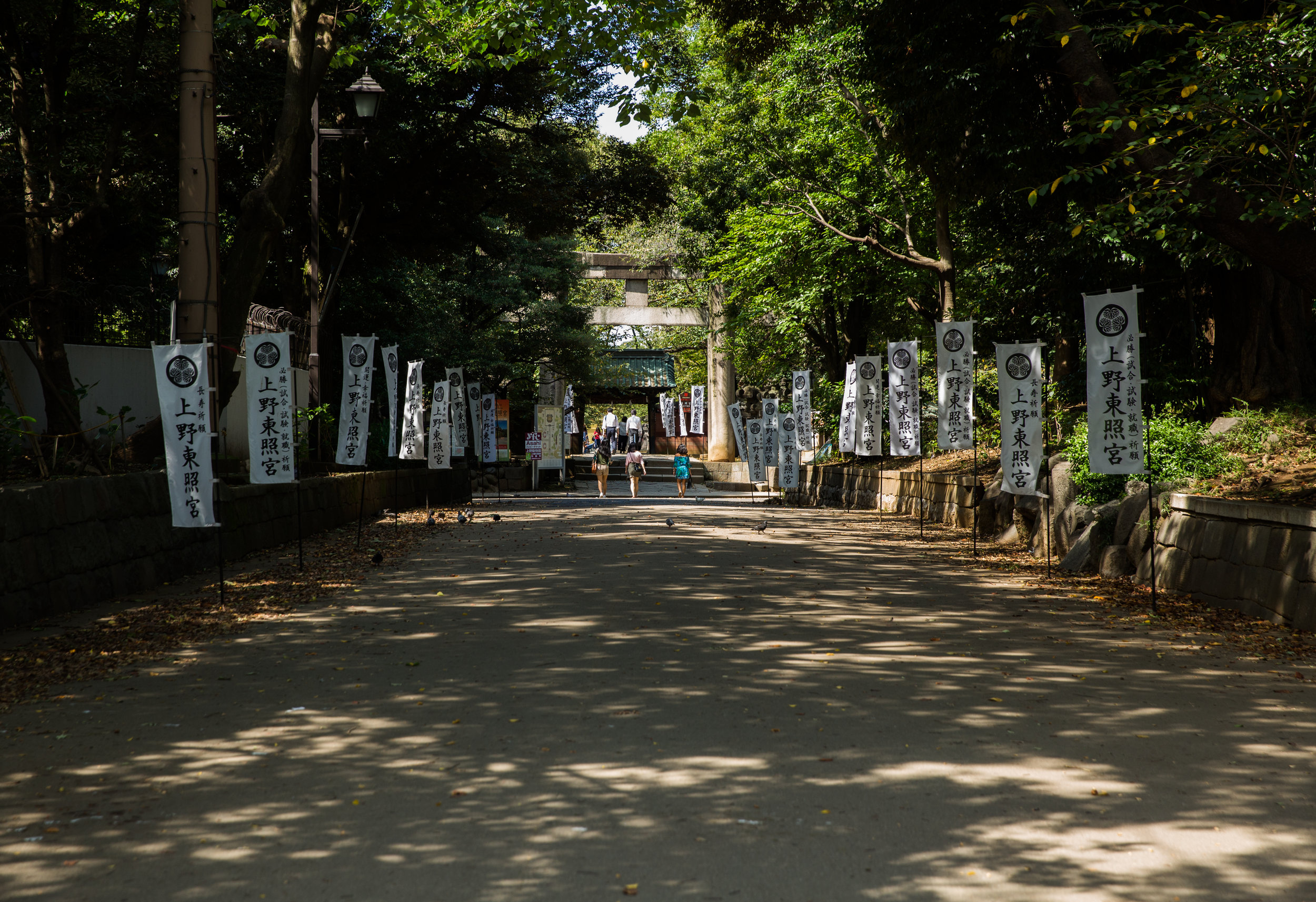
Exploring Onshi Park
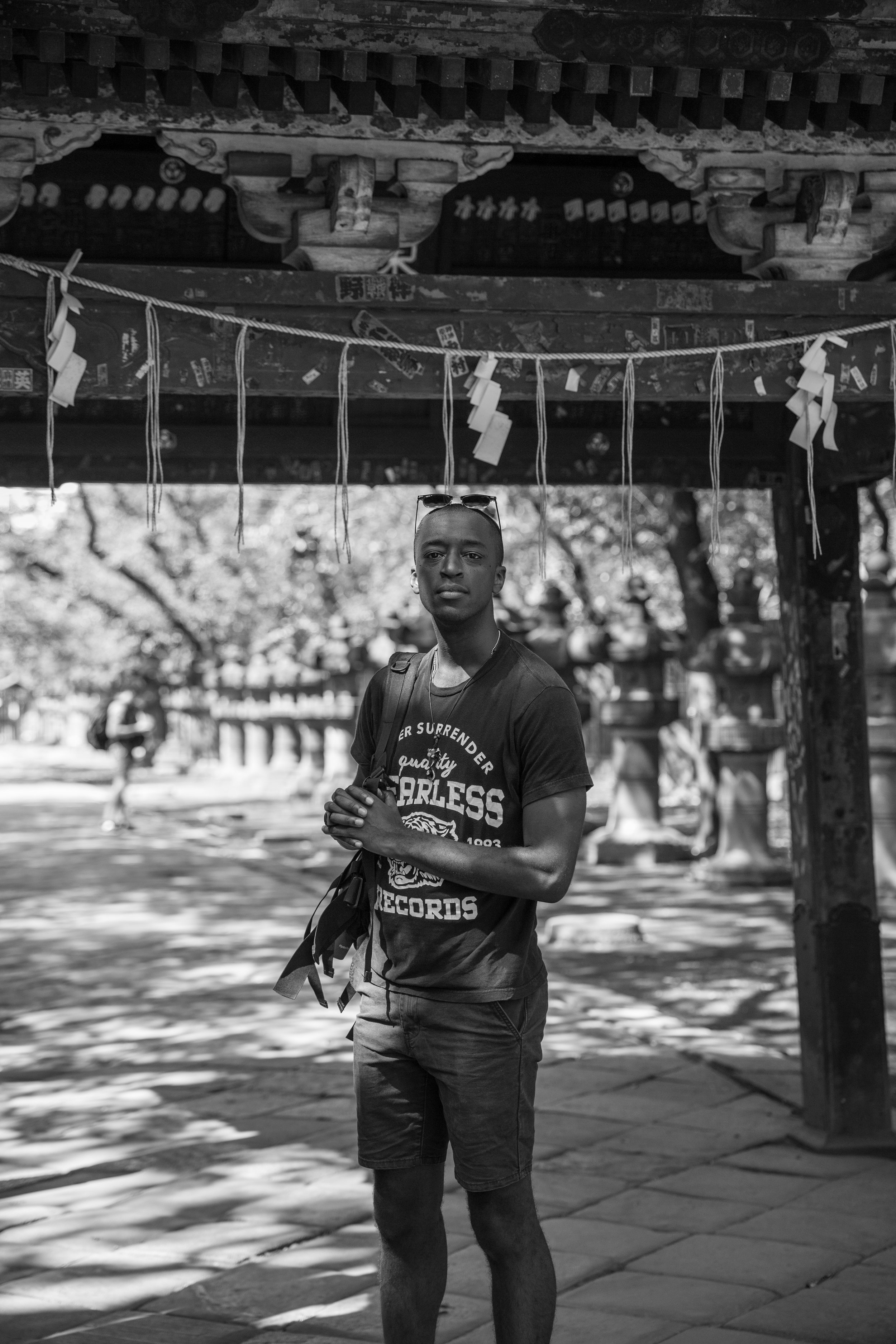
‘Oppin’ by SwuM
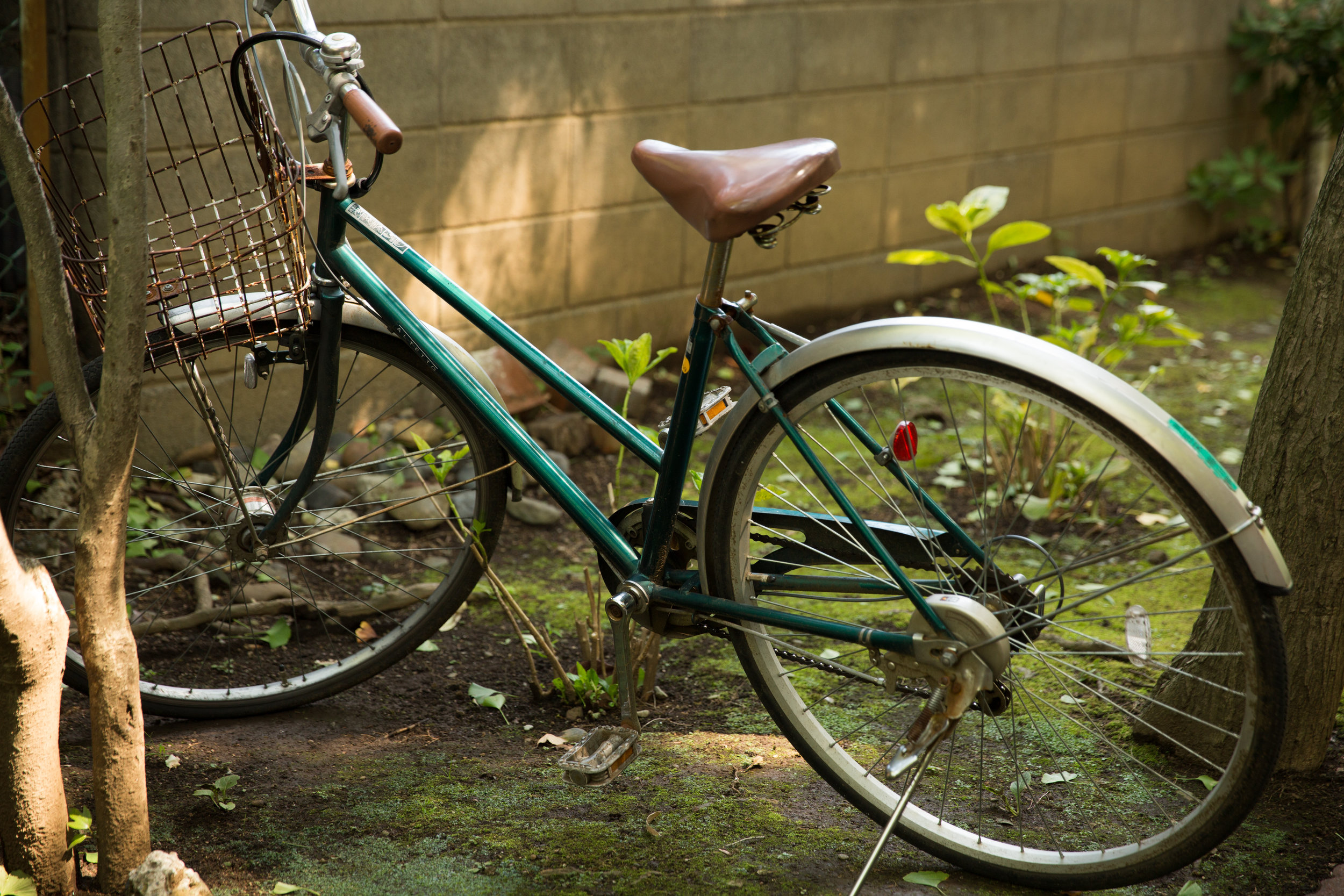
As busy as you’ll find the streets of Tokyo, bikes old and new are everywhere.

Tōeizan Kan'ei-ji Endon-in, a powerful religious center completed in 1625. Built to the North-East of Edo Castle, it was created to defend from the evil spirits that attacked from this direction.

The 50 copper lanterns at Toshogushaden Karamonmae and Sando are not used for illumination. Instead they were built as offerings to the Daimyos (feudal lords) from all over Japan. The name of each donor is written on the base, and is collectively a designated National Treasure of Japan.

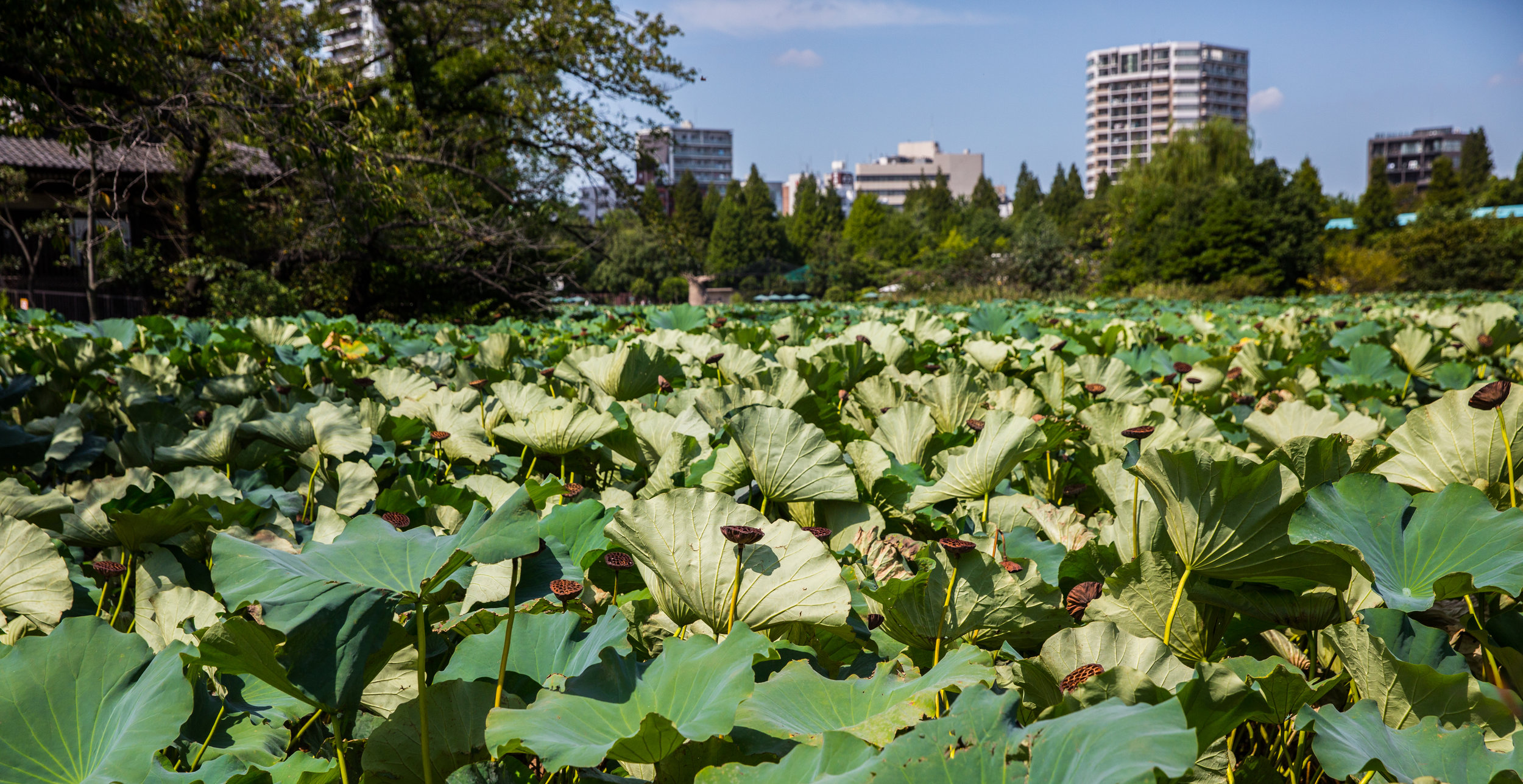
Shinobazuno Pond

‘Blessin’ It’ by Nujabes | Inside Shinobazunoike Bentendo Temple before a ceremony begins.


Sweet Lolita fashionistas on a stroll.
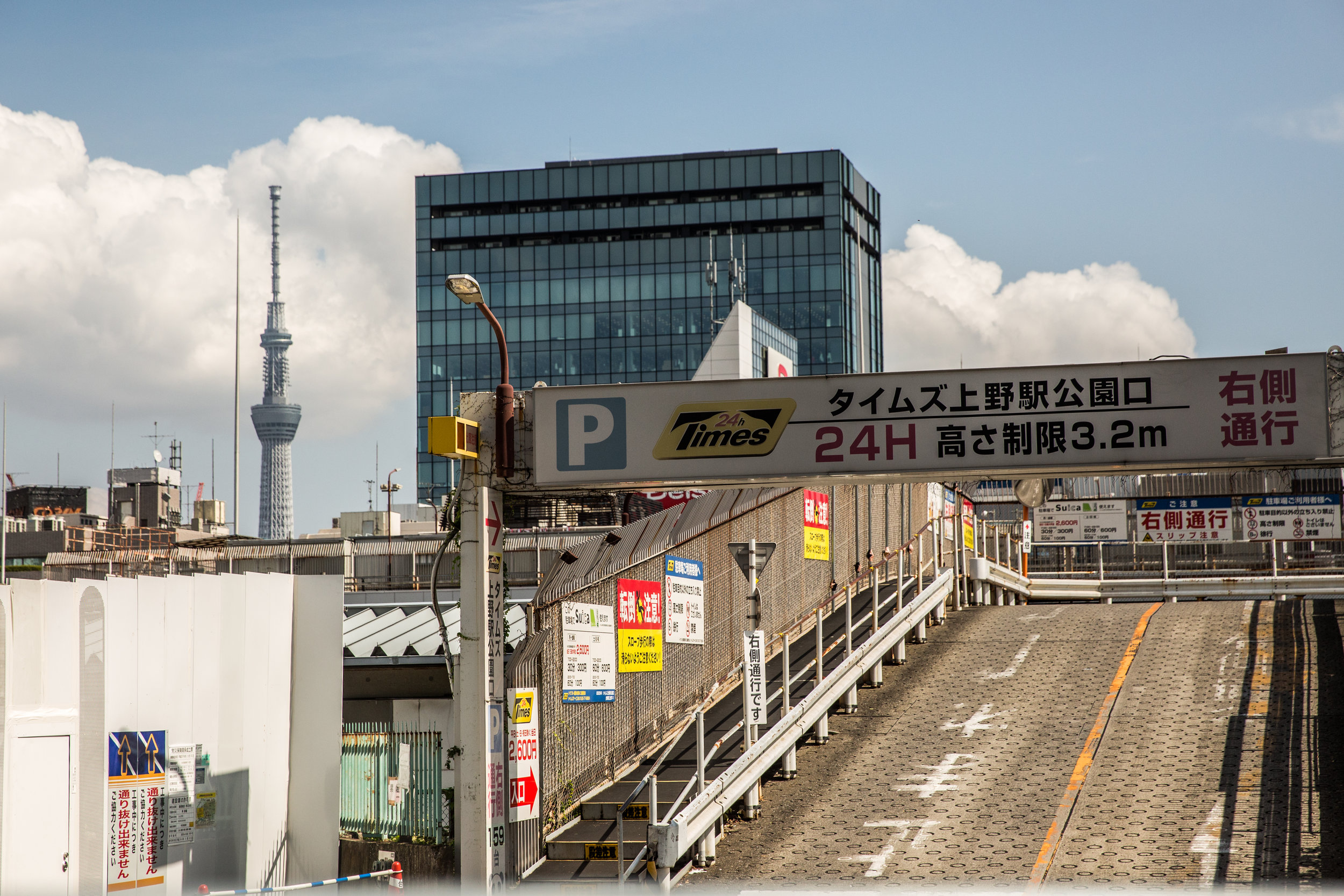
Outside Ueno station, Tokyo Skytree can be seen in the distance.

After a long day of exploring, we wanted to walk the area around Ueno in search of solid conveyor belt sushi spot.


Guess Waldo found a place in Japan.
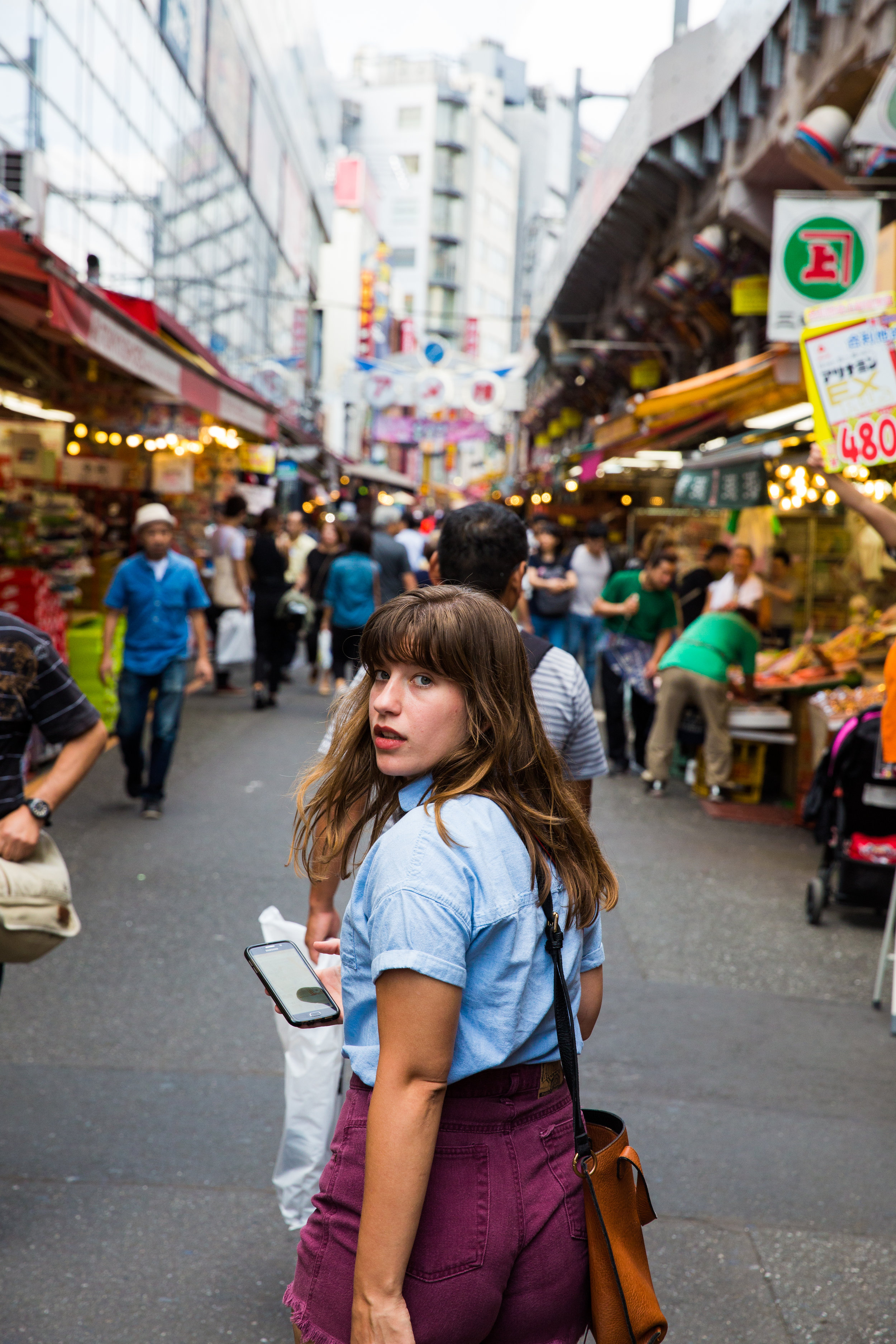
Eva in our final stretch to finding her beloved sushi.


‘Lady Brown’ by Nujabes | A couple waits for a train back to Shibuya.


Accessed from Harajuka Station, Takeshita Street is a prime location to grab “sweet” and “cute” style gifts, along with seeing the latest products in the various seed stores that the area flaunts.

Arriving at Shibuya Station, on our way back to relax before an evening out.

Outside Omote-Sando Station on the way to dinner with local friends.


Entrepreneur, artist, and friend of over a decade; Tomo Saito sits with members of Daybreaker to discuss their Tokyo rollout. Originally from the Gifu prefecture, he now resides in Los Angeles\San Francisco but was home to celebrate his birthday.

We met at an open air food hall called Commune 2nd. Here you’ll find an assortment of beers, sausages, bread, and all the salty-savory snacks you can handle. I opted for fried squid and potatoes.

Back in Ueno Park- Because it was closed on our first visit, we made our way to the Tokyo National Museum to finally get a look.

‘Disparate Youth’ by Santigold | A group of teens celebrates the end of the day.

Established in 1872, the Tokyo National Museum is one of the largest art museums in the world. Focusing on ancient Japanese and Asian art from along the Silk Road, it also contains an substantial amount of Greco-Buddhist art. This was taken outside the Honkan building.


When you gotta hit up 7-Eleven to supplies for the homie who went to hard that night.


We explore the collection of the vast array of items a samurai kept dear. Anyone from or who sympathize with the members of the warrior classes across the world all have a profound appreciation over the enigmatic beauty of samurai culture. it always seemed strange to me that western cultures have move away from implementing rulers with less overall life experience. It’s been proven that well rounded leaders thrive.

I could spend a lifetime studying the swords of Japan. I’m still hard pressed to think of anything built with more care with parallel strength.


Riding gear of a samurai archer.
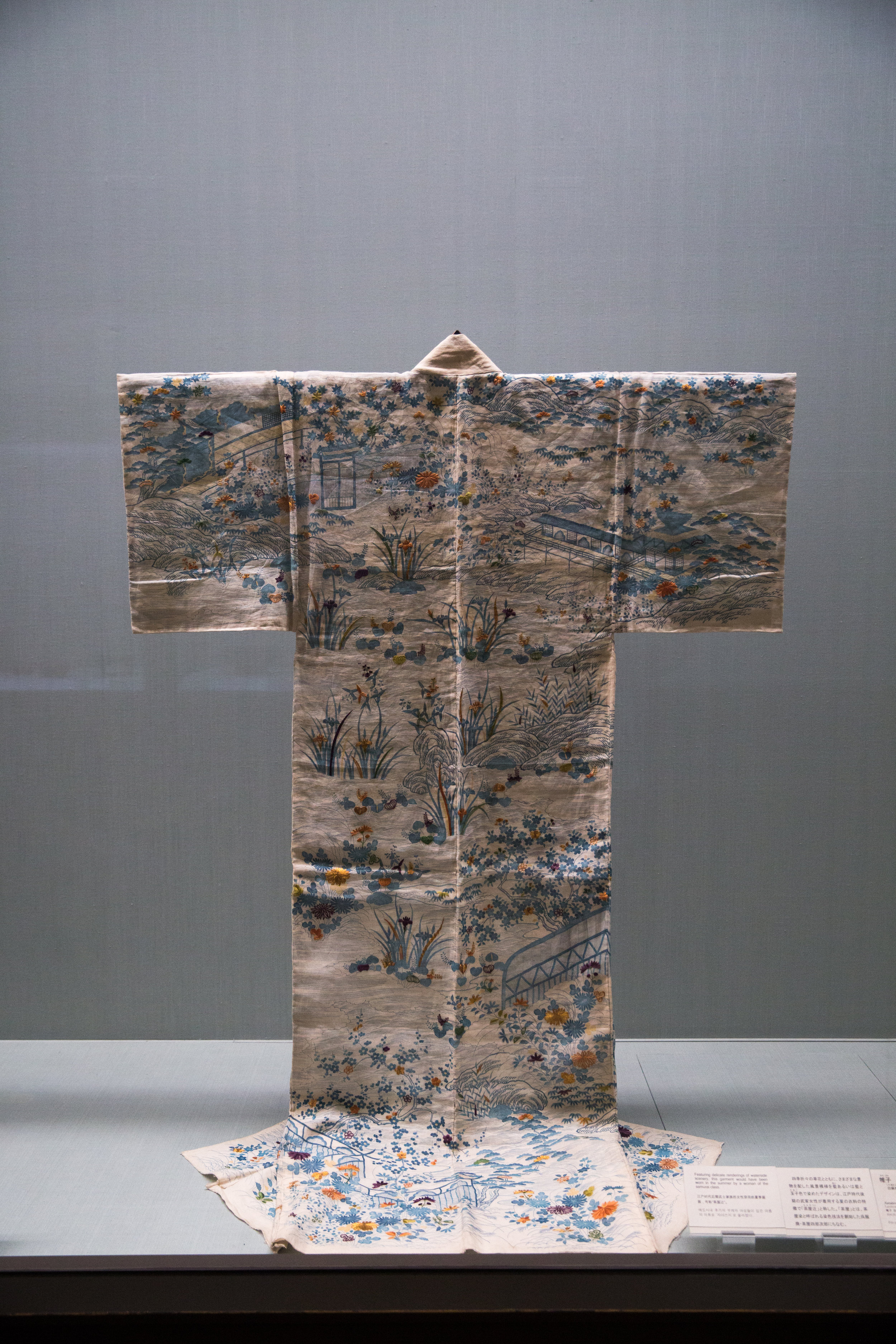
A kimono made for a woman of the samurai class to be worn in the summer.


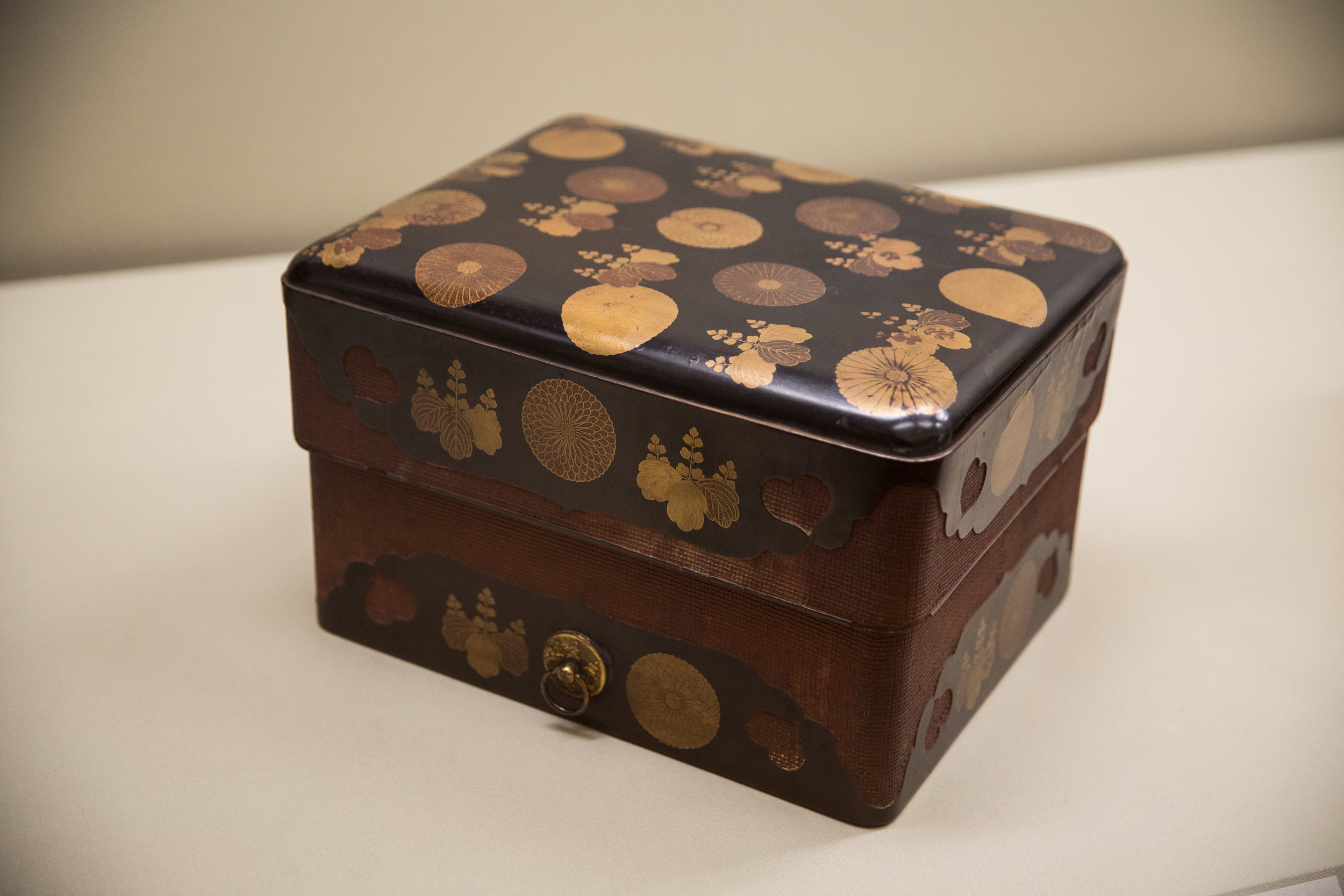

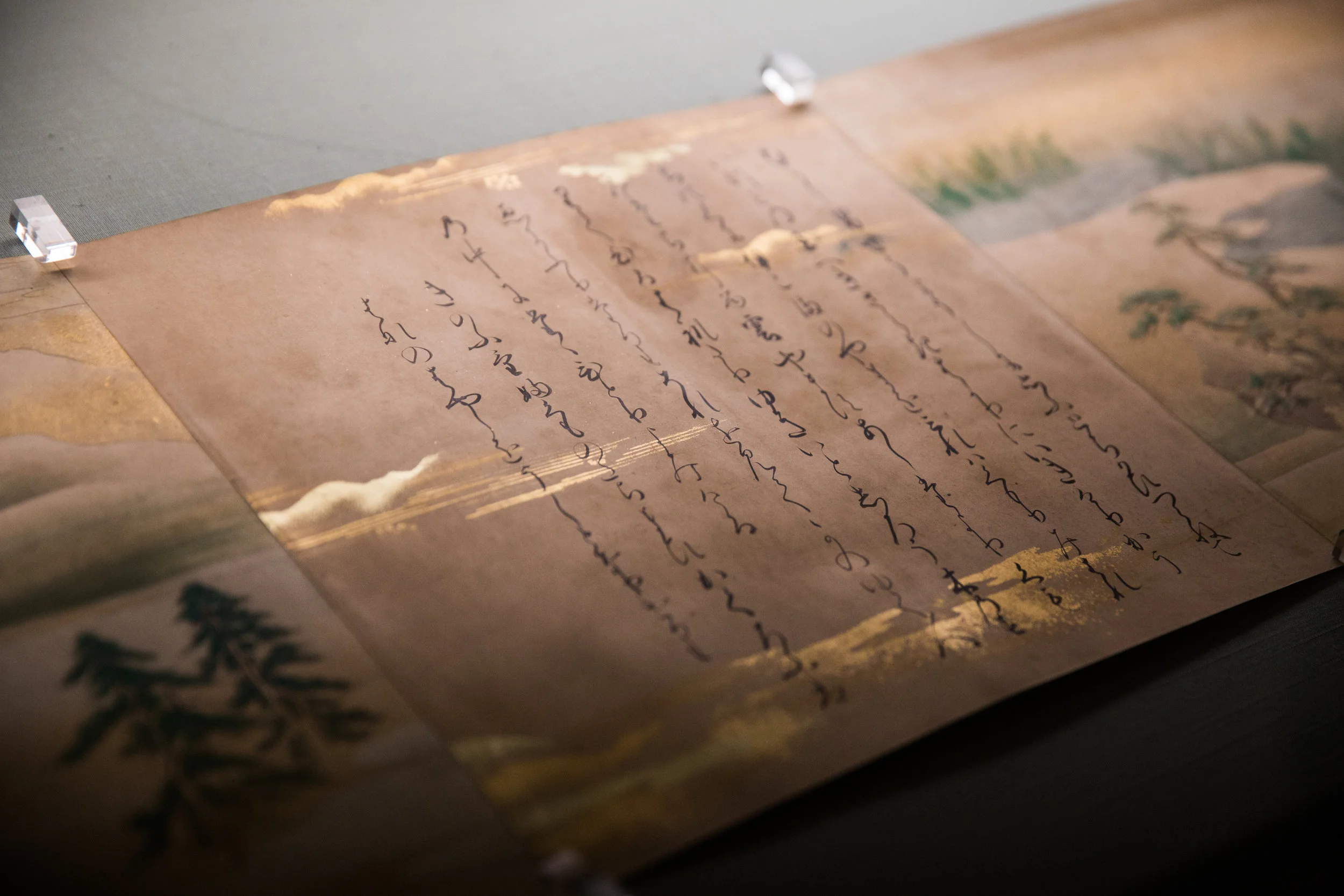
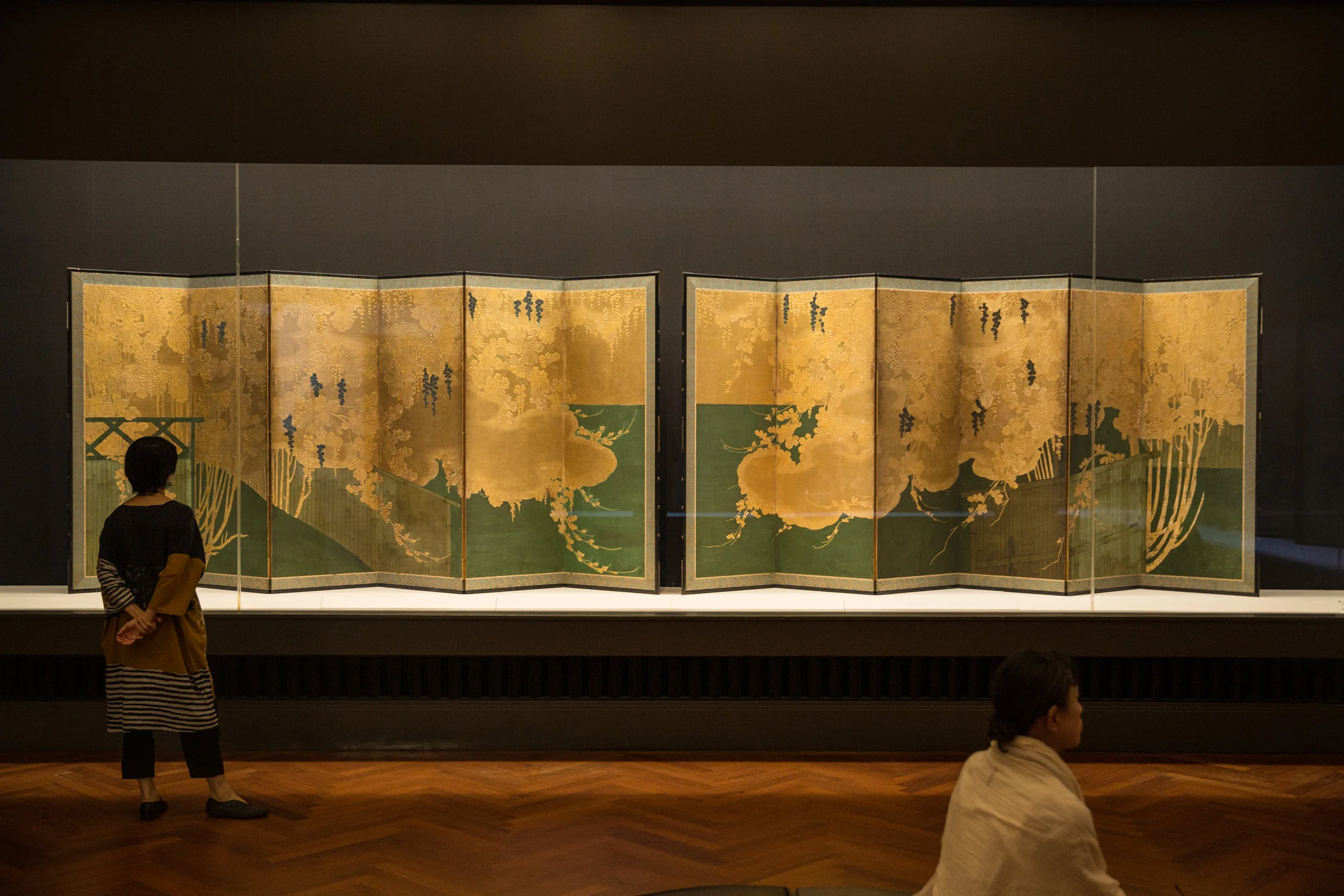
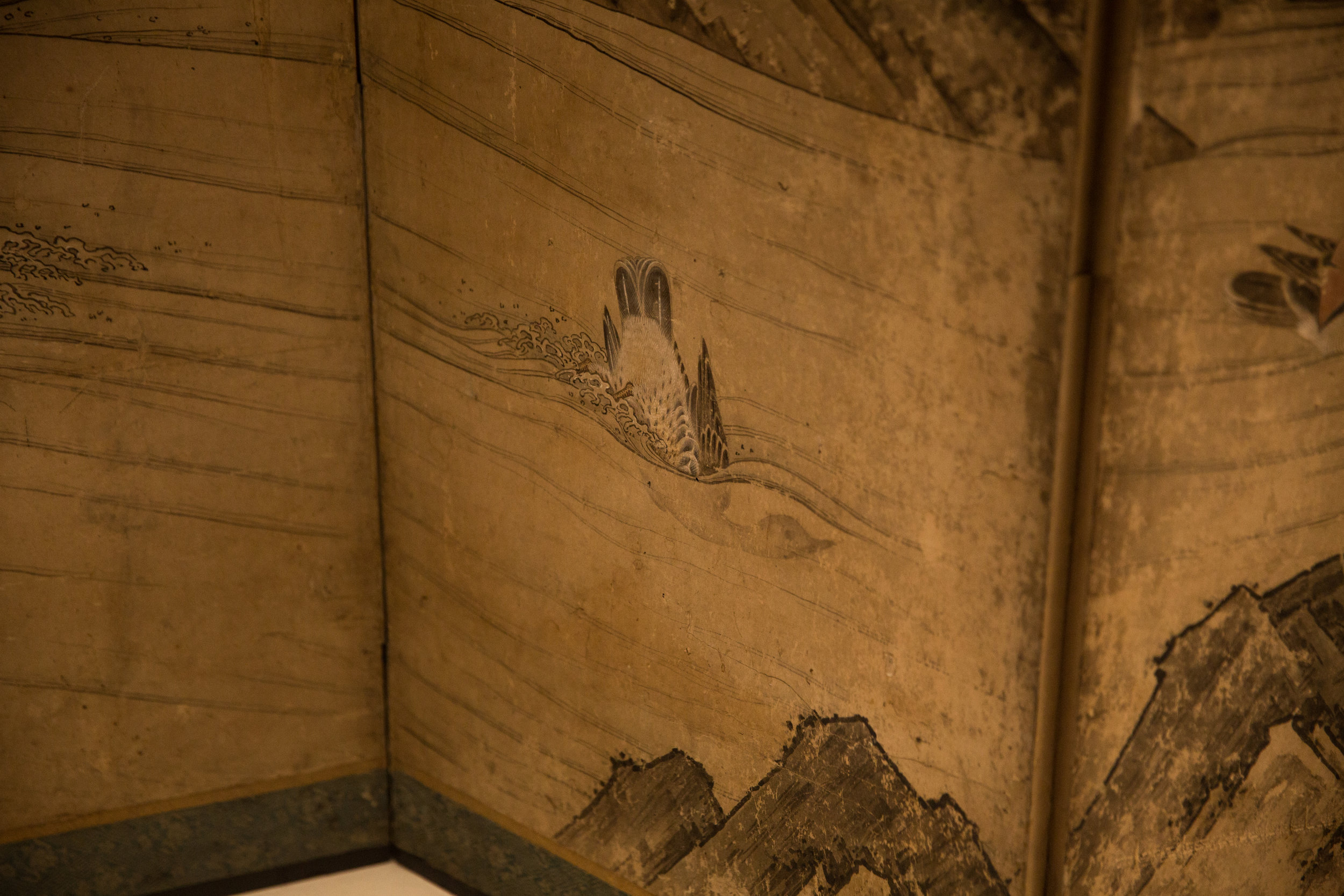

A daimyo (feudal lord) doll procession with stunning detail. These stood about 4 inches tall.


‘All Y’all’ by Timbaland | Tomo took time to show me his favorite spots in Tokyo on his birthday.
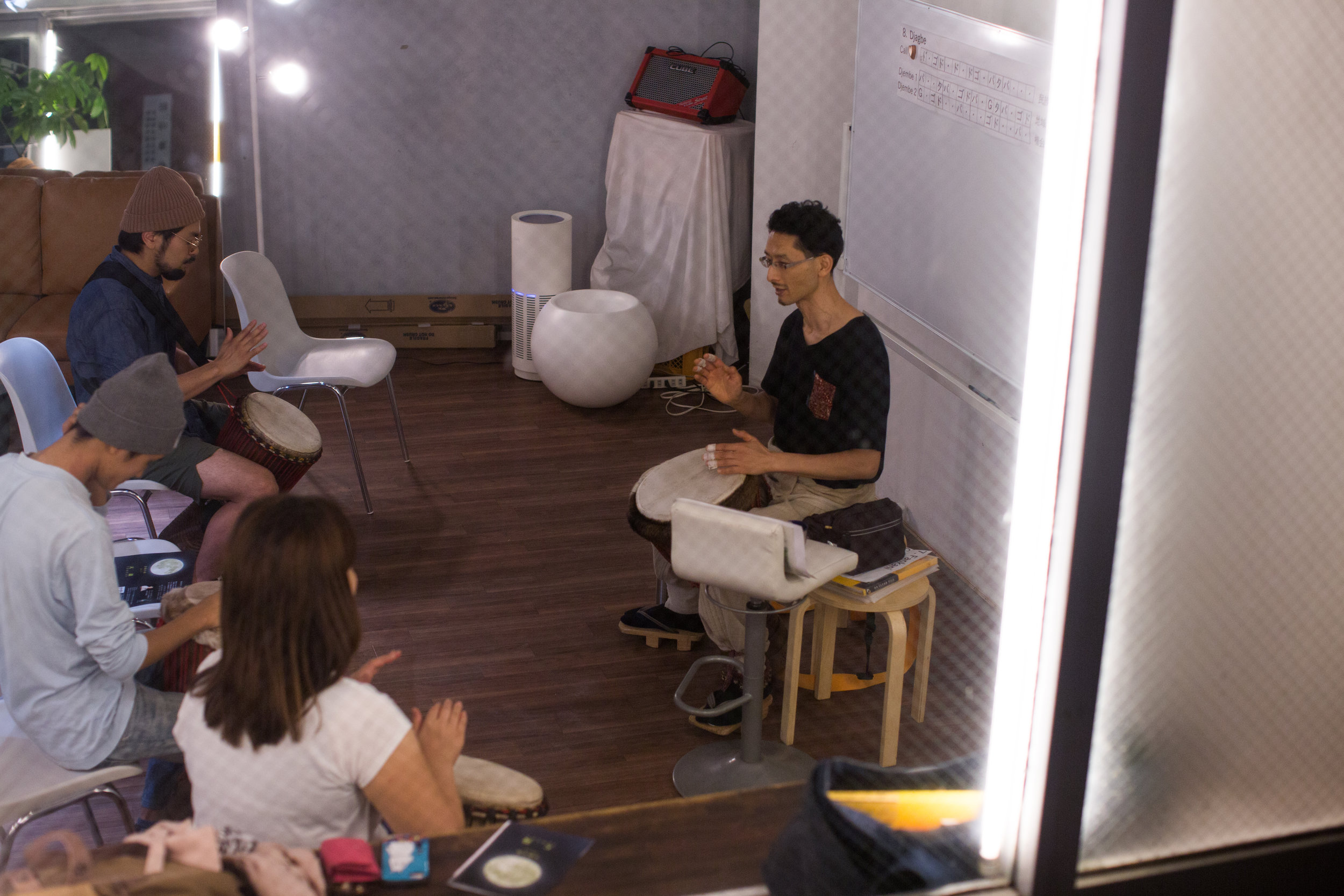
Cruising to a bar, I found that the culture discovery mission was a mutual one between Japan and West Africa.

Inside the tiny RED bar. Be careful though, no photos are allowed, and the drinks are strong.

A Mario Cart city tour dabs on traffic for me on the streets of Shibuya.

‘Powerglide’ by Rae Sremmurd | DJ KARIN’s infamous pink and copper Lamborghini Aventador.
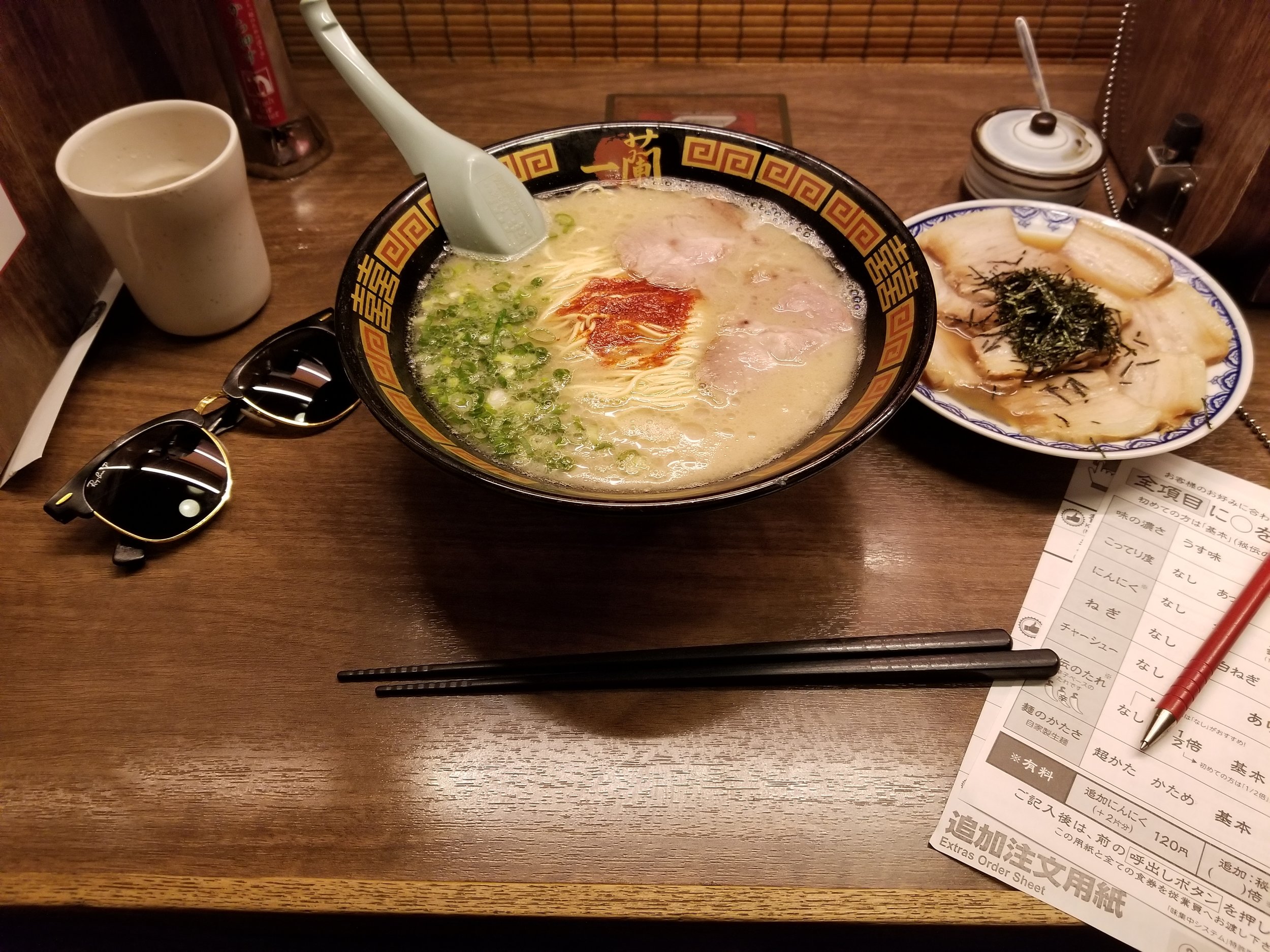
Tomo introduced me to a place called Ichiran ramen, and it is hands down the best I’ve ever had. This was my second visit of the day. Post drinking food in Japan may as well be called soul food.

Our last full day in Tokyo we made a slower trek through Yoyogi Park to get a better feel on daily life in the city.

A photoshoot in progress.
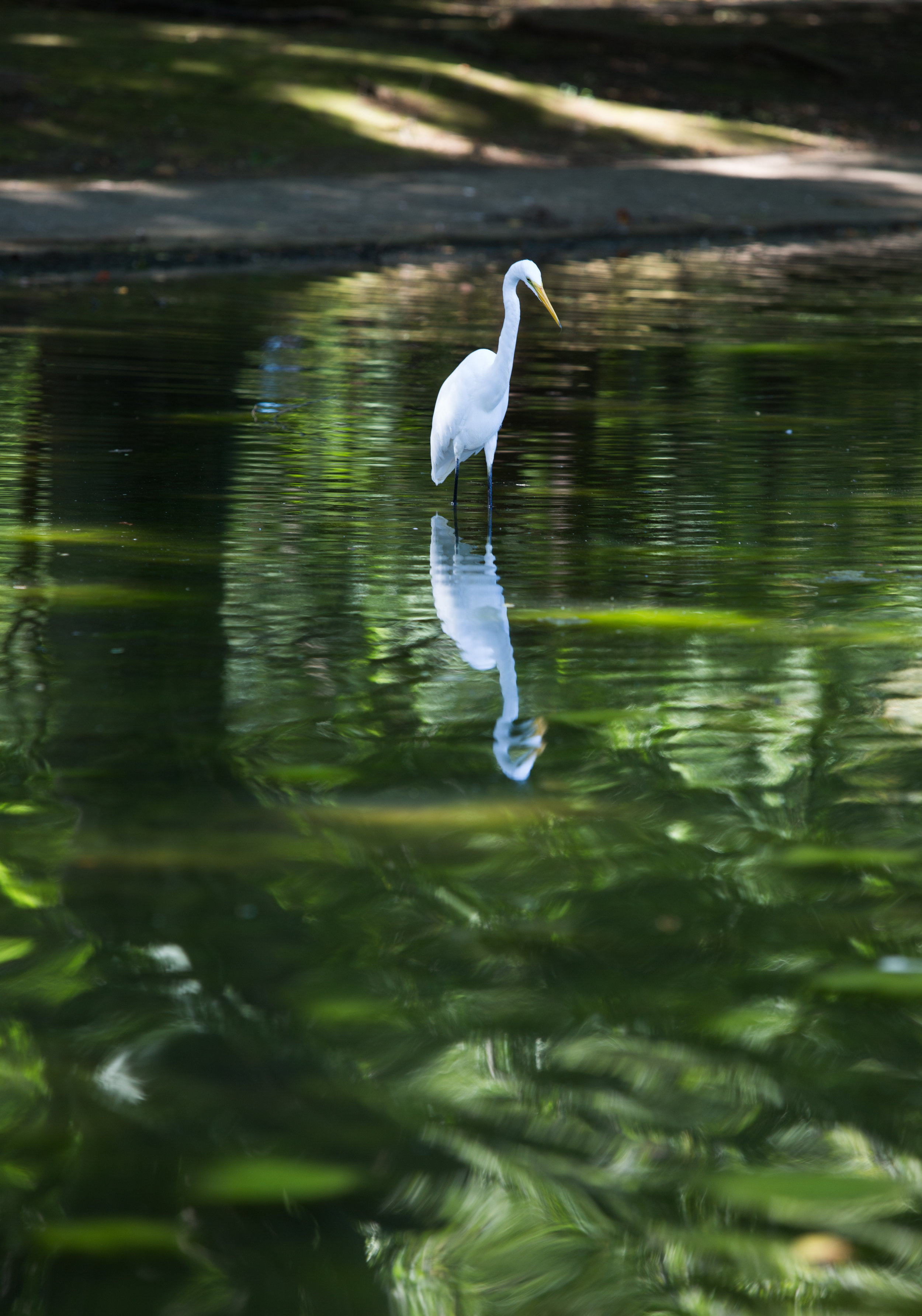

‘People Like Myself’ by Timbaland & Magoo | Reading in Yoyogi park.

Teens get ambushed by an interview team.

The gates to the Meiji Shrine. Emperor Meiji was the leader of a time known as the Meiji Restoration, where much of Japan was transformed from politics, to art, and several other pillars of Japanese life.


Sake offerings to the spirit of the Emperor.

Visitors gather to wash their hands before prayer in the shrine.


A family of spiders watches over the pond.


‘All Matter’ by The Robert Glasper Experiment

The Meiji Jingu Inner Garden holds a powerfully significant area; Kiyomasa’s Well. The water was so clear and still it seemed like light hung above it.

A couple pauses to cool down from the fall heat before heading to the sun again after a long day.


‘Tea Leaf Dancers’ by Flying Lotus feat. Andreya Triana | A team of dancers practices for a hip hop dance routine.


This time, it was Eva’s birthday, and since we couldn’t get tickets to the Studio Ghibli tour, we made way to Setagaya for dessert.


We can’t remember exactly, but it was around here when we realized how familar this part of town looked. Finally we realized, after decades in the United States watching anime, that the cities you see in daily life anime were not fictional, but instead gorgeous pathways among quiet neighborhoods.
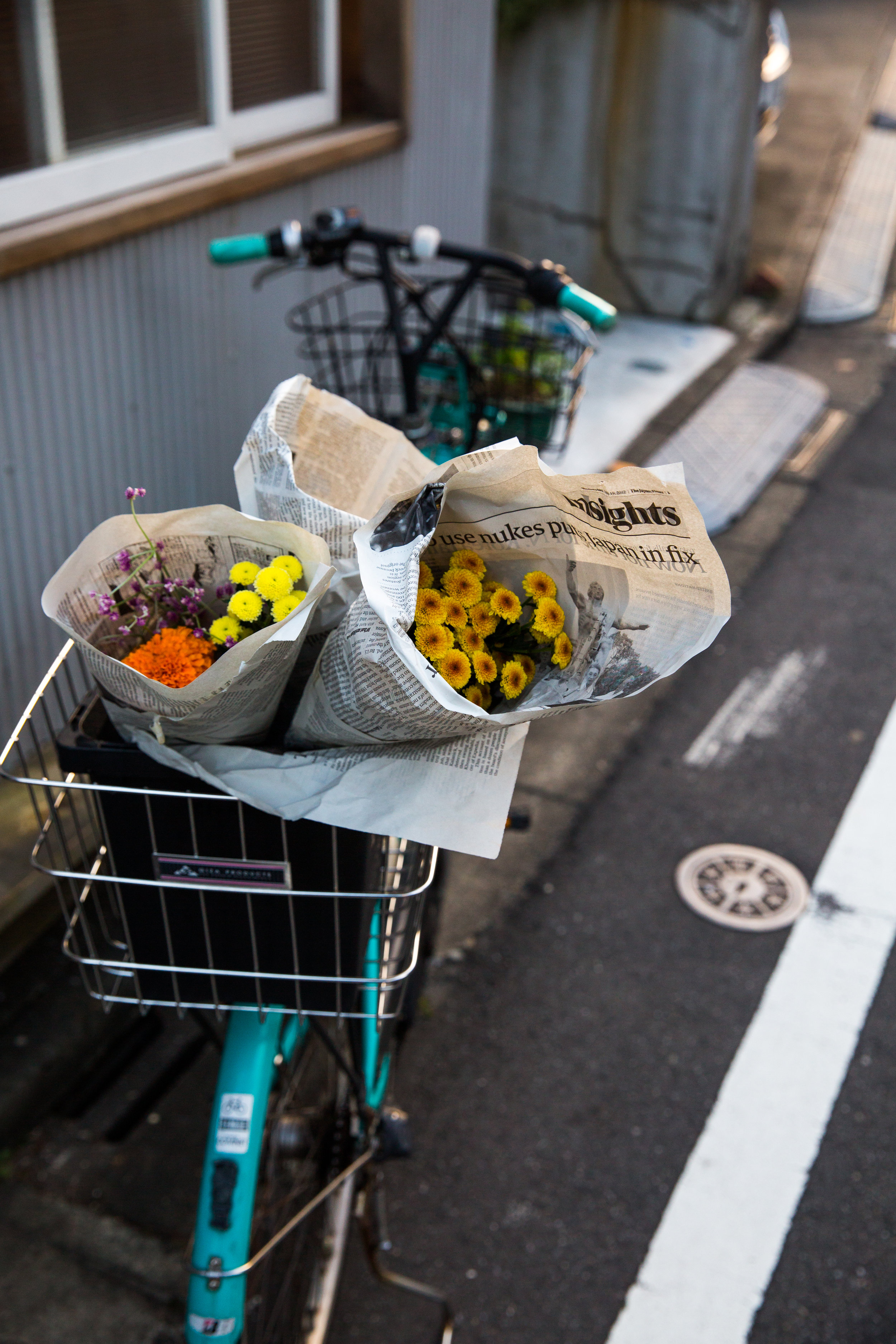
Interestingly enough, this newspaper was an old story, and not related to the nuclear talks with North Korea happening this same month.


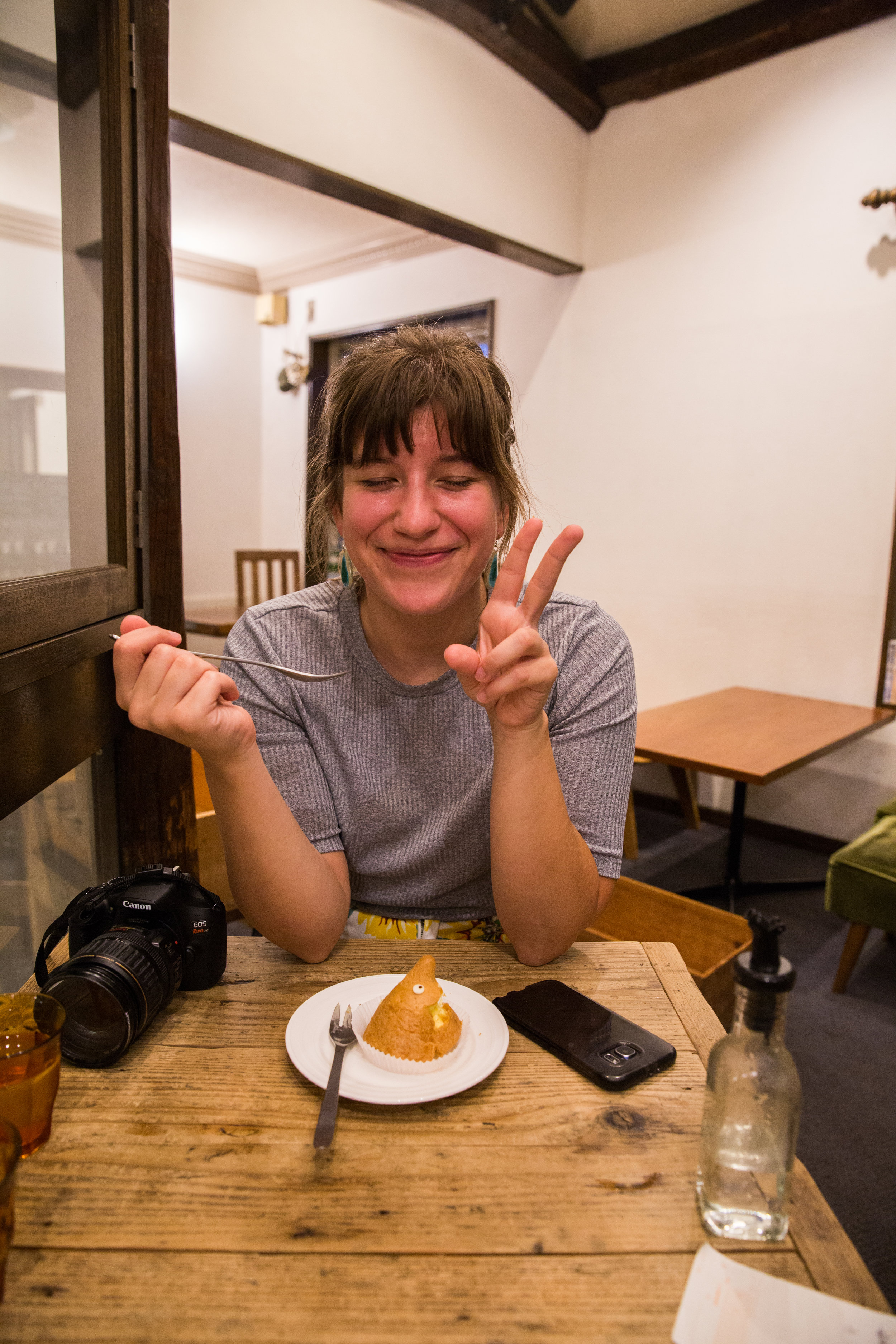
‘Feeling Good’ by Nina Simone | Ghibli, cream puffs, her favorite books in the corner, and Nina Simone on the radio. A birthday well spent.
KYOTO
The second leg of our adventure would be aboard a Shinkansen 700 bullet train to Kyoto. Japan’s old capitol, its a beautiful blend of modern life and ancient wisdom along every street. Riding in it felt like birds gliding along a riverbank. The cone of the train is shaped like a birds beak (in fact, its based on many animals) to cut through the air more efficiently.

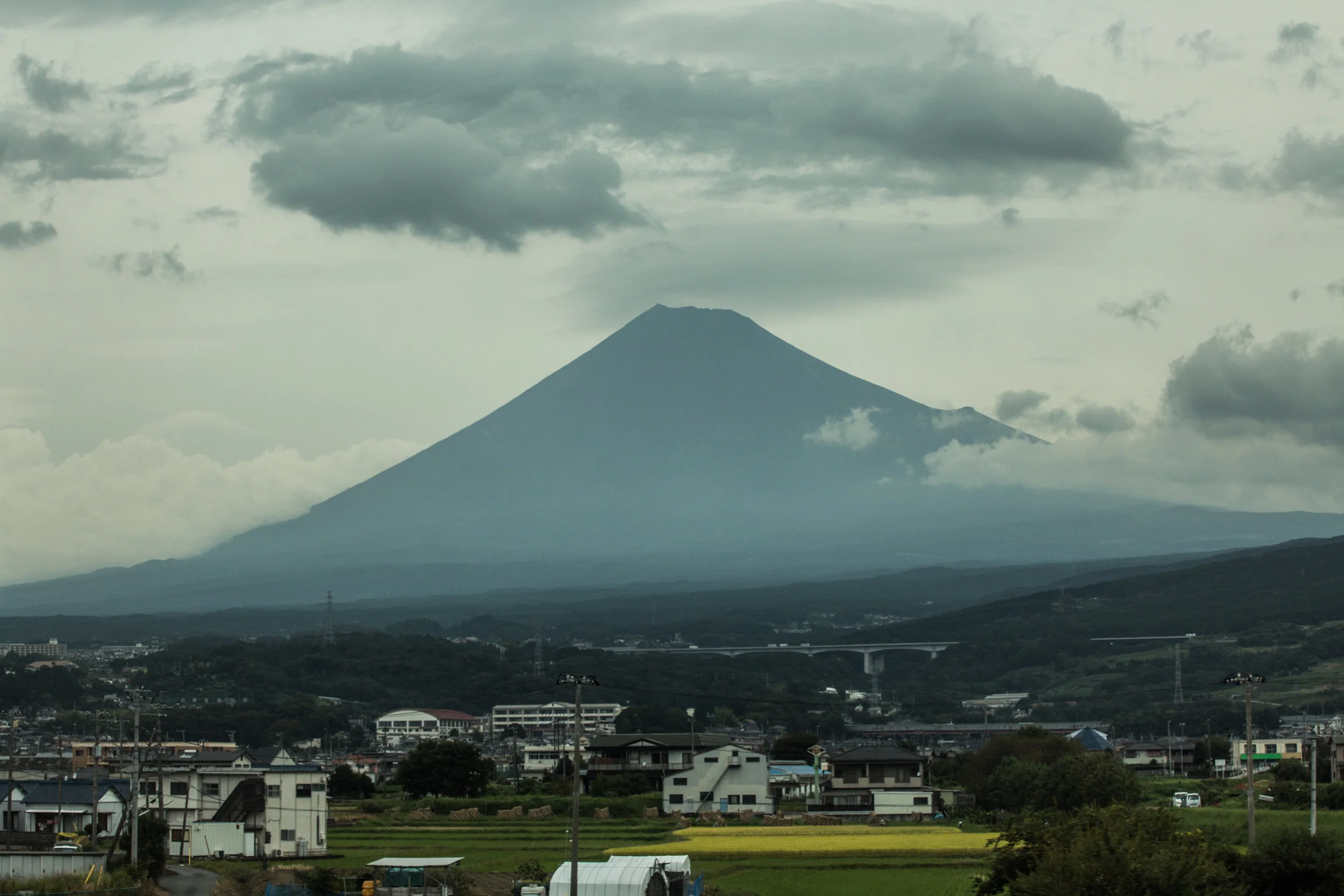
‘Kids See Ghosts’ by GOOD Music | Mount Fuji is hugged by clouds as we travel on a rainy morning.

While the Fushimi Inari Shrine is a must see, you’d best get there around 7am if you intend on getting that perfect solo shot. We were more dedicated to sleep.


A group of kids on school trip exchanged their questions about our visit to Japan for a photo. Wish you all the best!


‘Can’t Hear Mosquitone Any More #1’ by toe
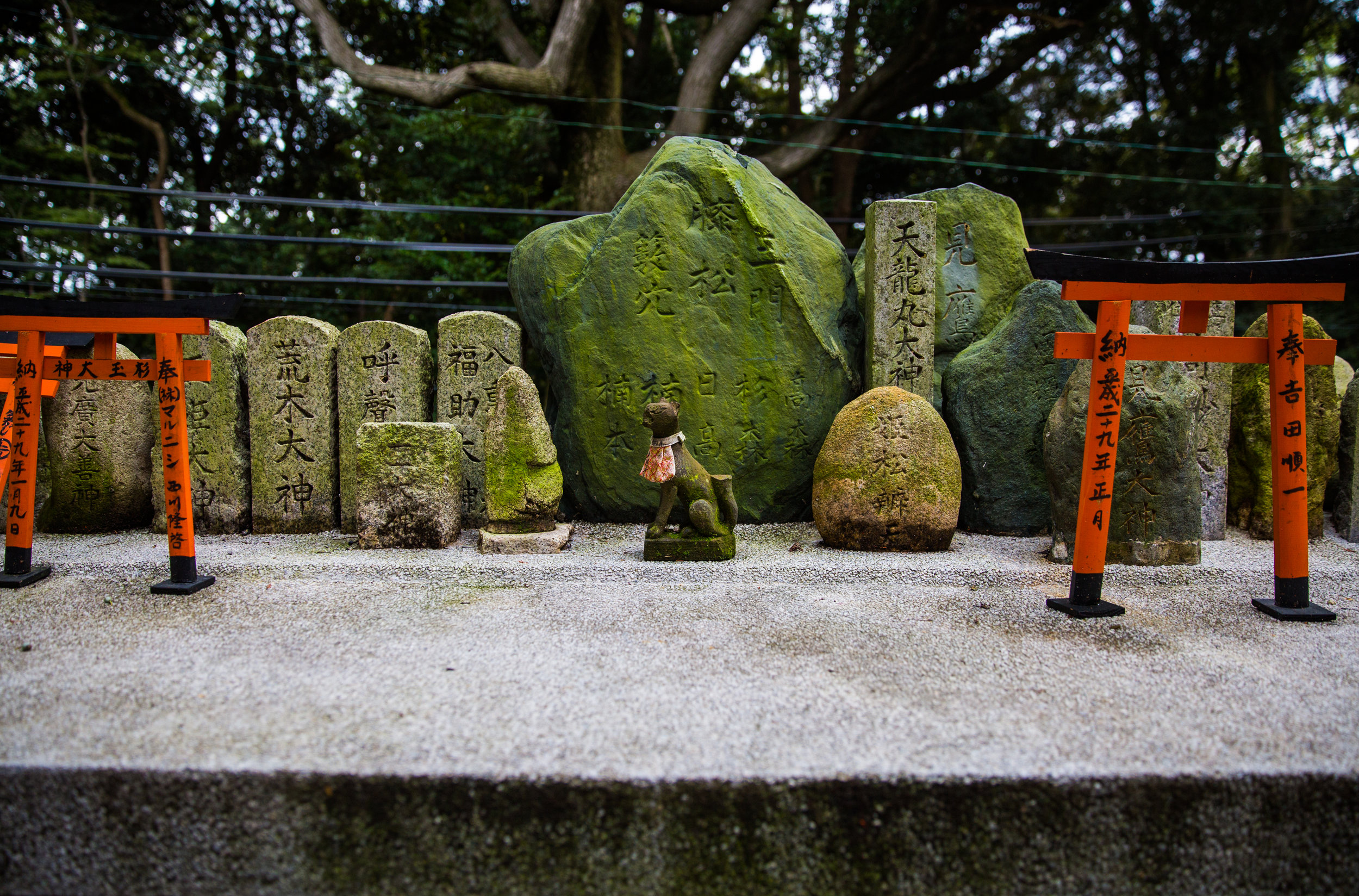


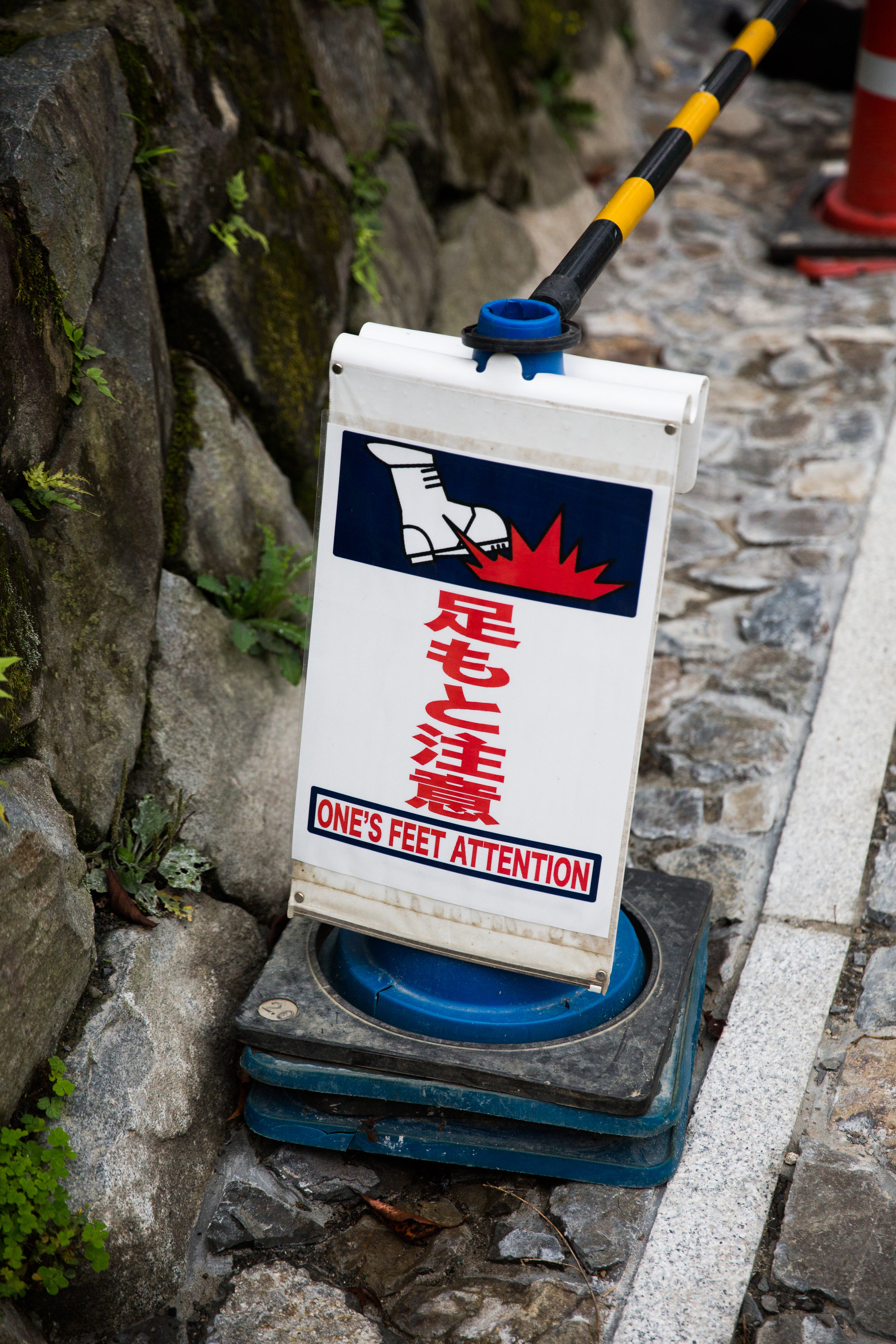

‘Cat Rider’ by Little Dragon


After lunch at the bottom of the hillside under this cross-stone building, we made our way back to downtown Kyoto.
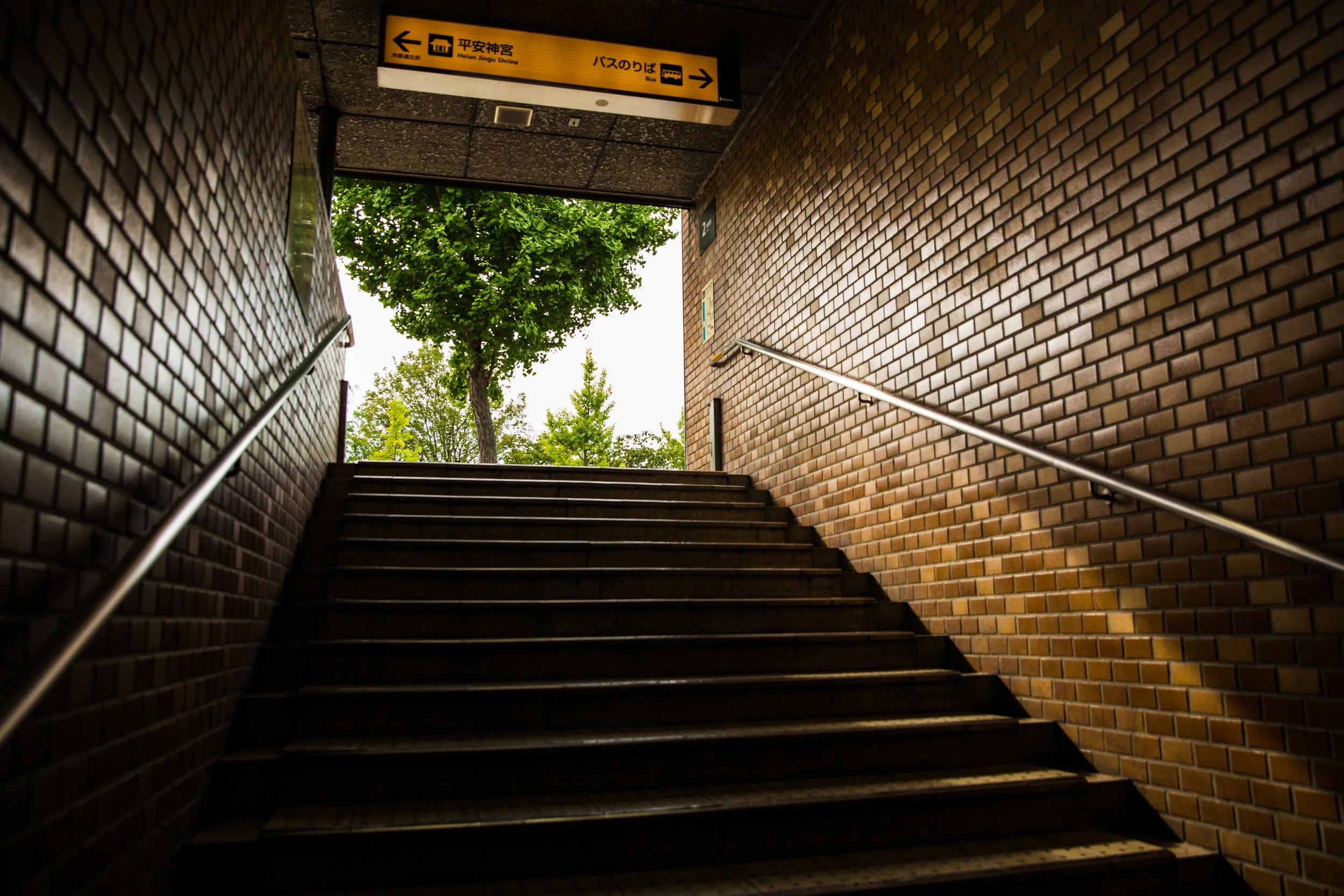
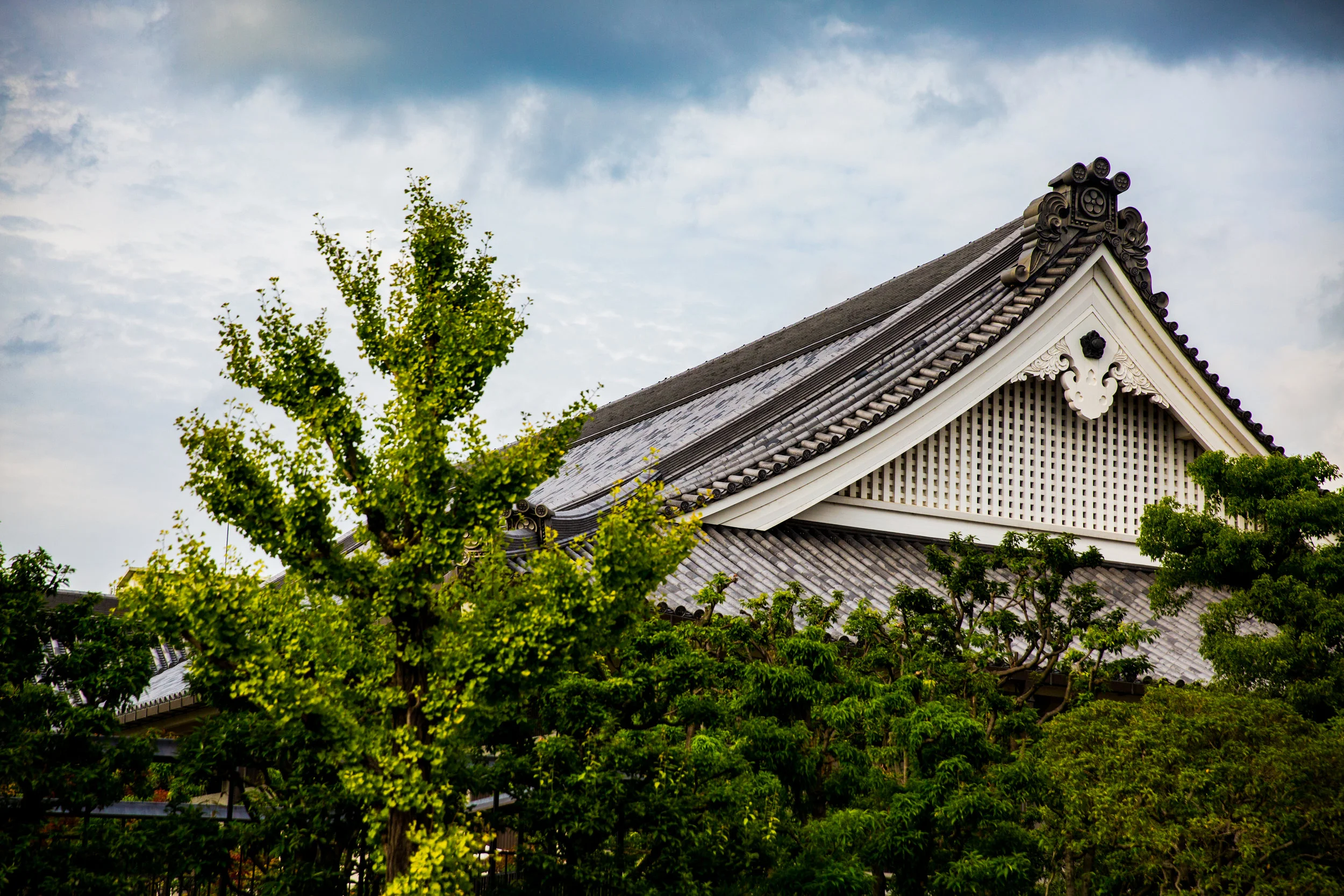


‘Freelance’ by Toro y Moi
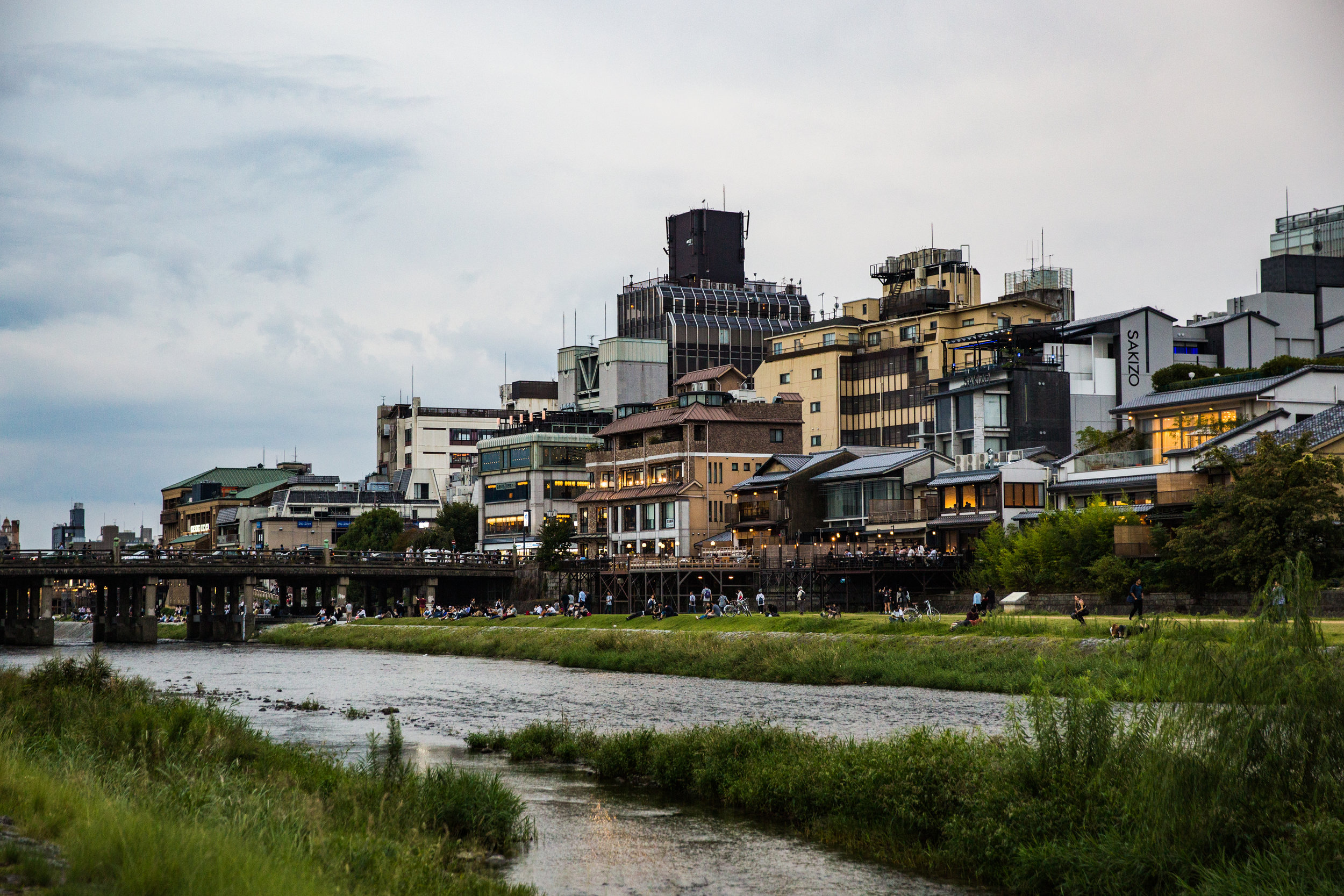
Locals and tourists alike enjoy the riverbank before making their way to Pontocho Alley for shopping, food, and sightseeing.

Izumo no Okuni, originator of Kabuki Theatre.

Kyoto’s streets wind around shines built hundreds ago in a harmonious manner.


‘Violet (The Upper Room)’ by Cunninlynguists

I disturb a discussion with my camera clicks as we enter the Arashiyama Bamboo Grove. Perhaps Canon is reading and wants me to go full frame mirrorless as an ambassador..


‘These Paths’ by Yeah Yeah Yeahs | At the end of the grove, pay the $10 to see Okochi Sanso Garden. The paths and views were magnificent and lush in shades of green I didn’t know existed.

‘Next view’ by Nujabes


‘Highs 2 Lows’ by Nujabes feat. Cise Starr


This guy was dressed to cool not to follow through the city for a photo.

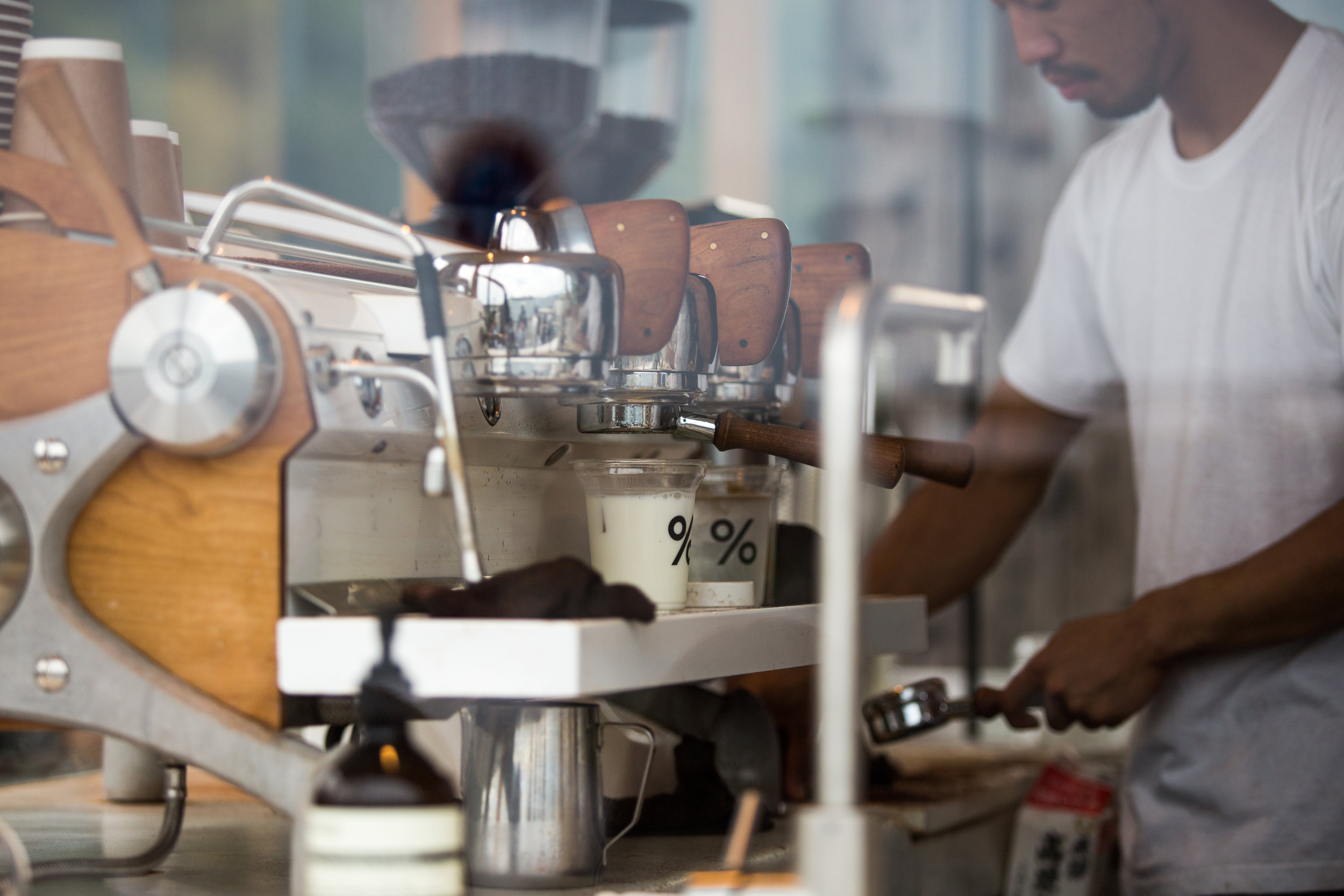
‘The Park’ by Cunninlynguists | Down the street from the bamboo forest, we stopped at the bank of the Katsura river for coffee.


Arabica % is worth the wait.



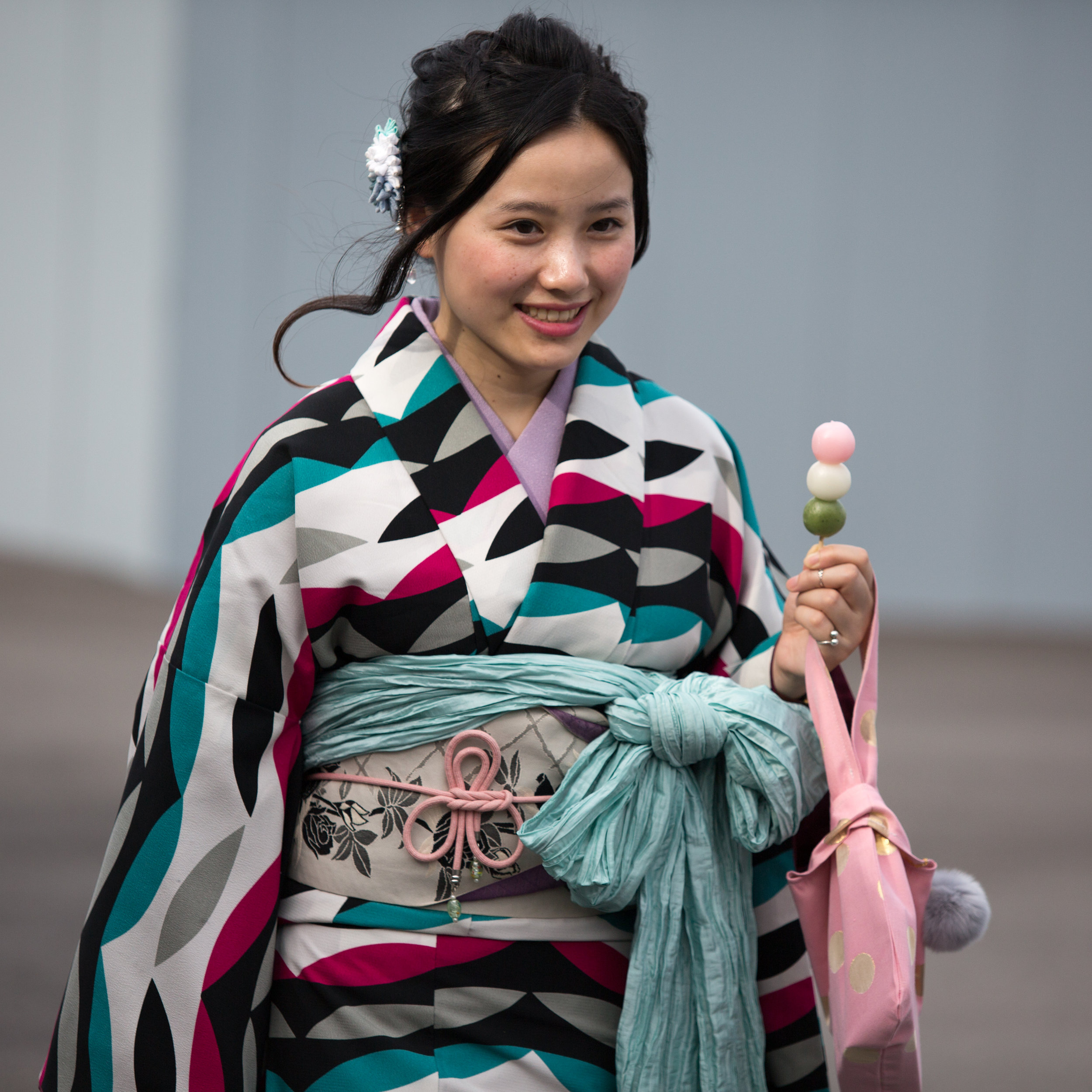
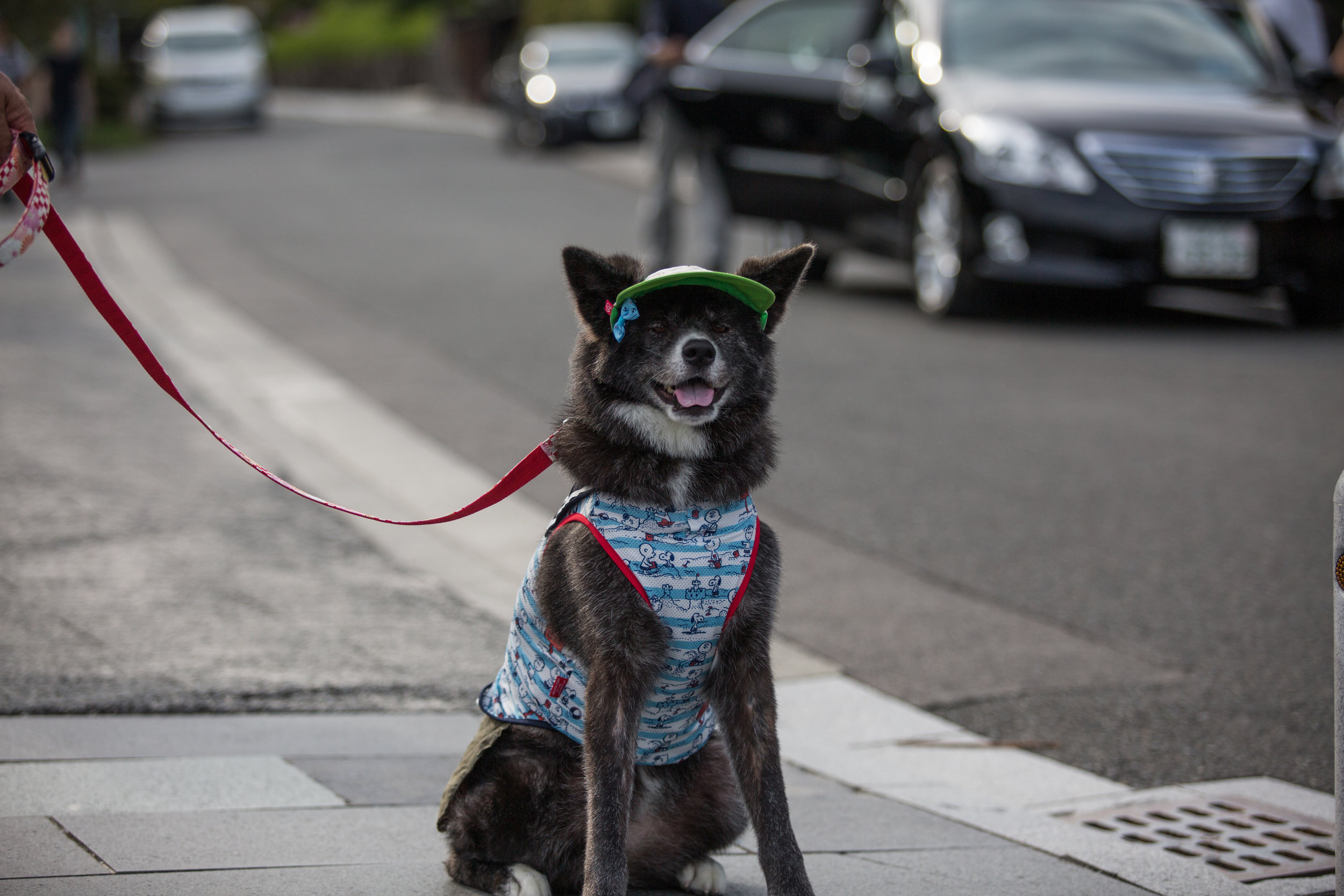


TAKAYAMA
The final leg of the trip took place in the hills of Takayama, a city known for its woodwork and year round beauty. Many locals retreat here for ski season. We hopped on a smaller train once back in Nagoya to enjoy the winding canyons and gorgeous small towns.
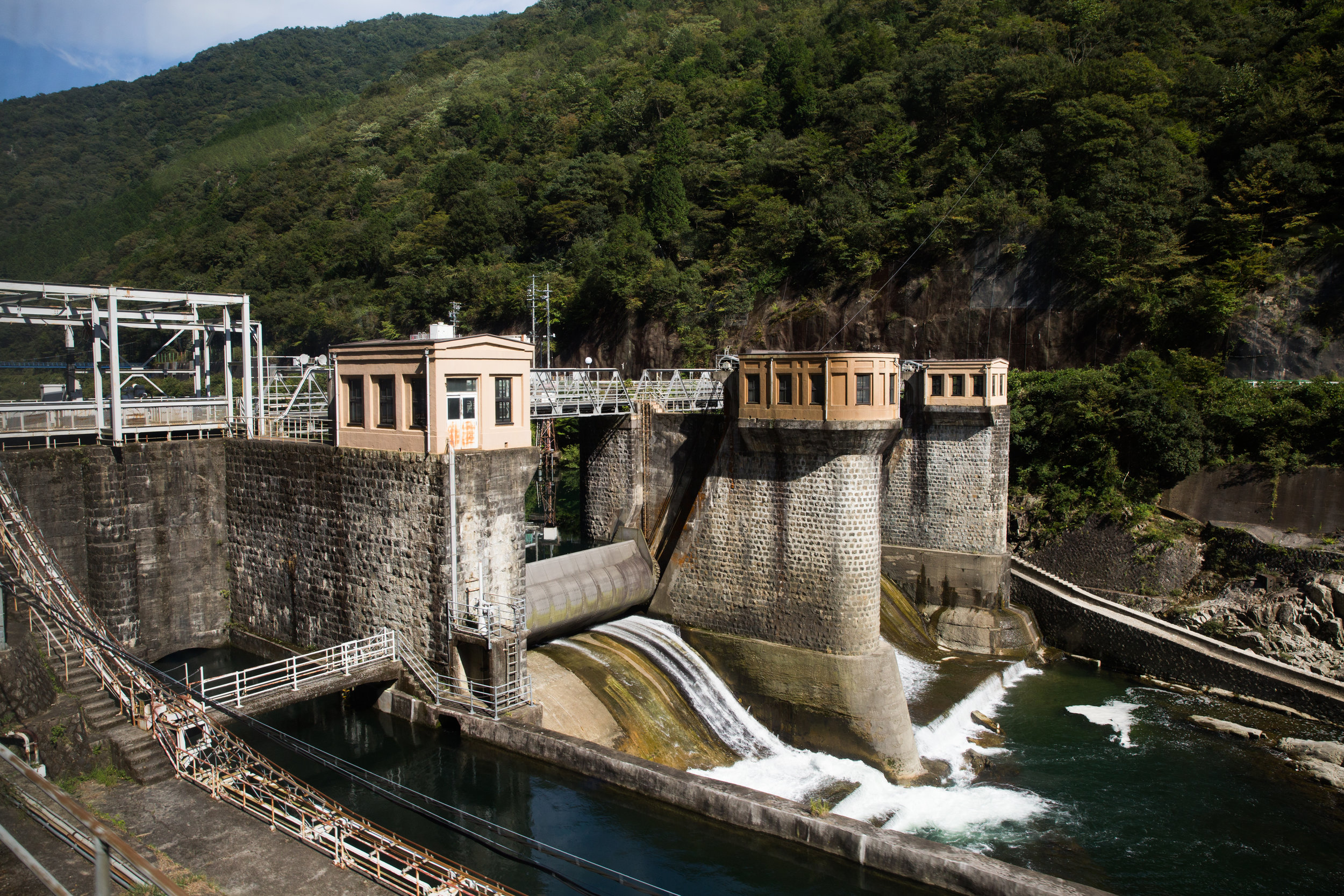

‘Love on a Real Train’ by Tangerine Dream
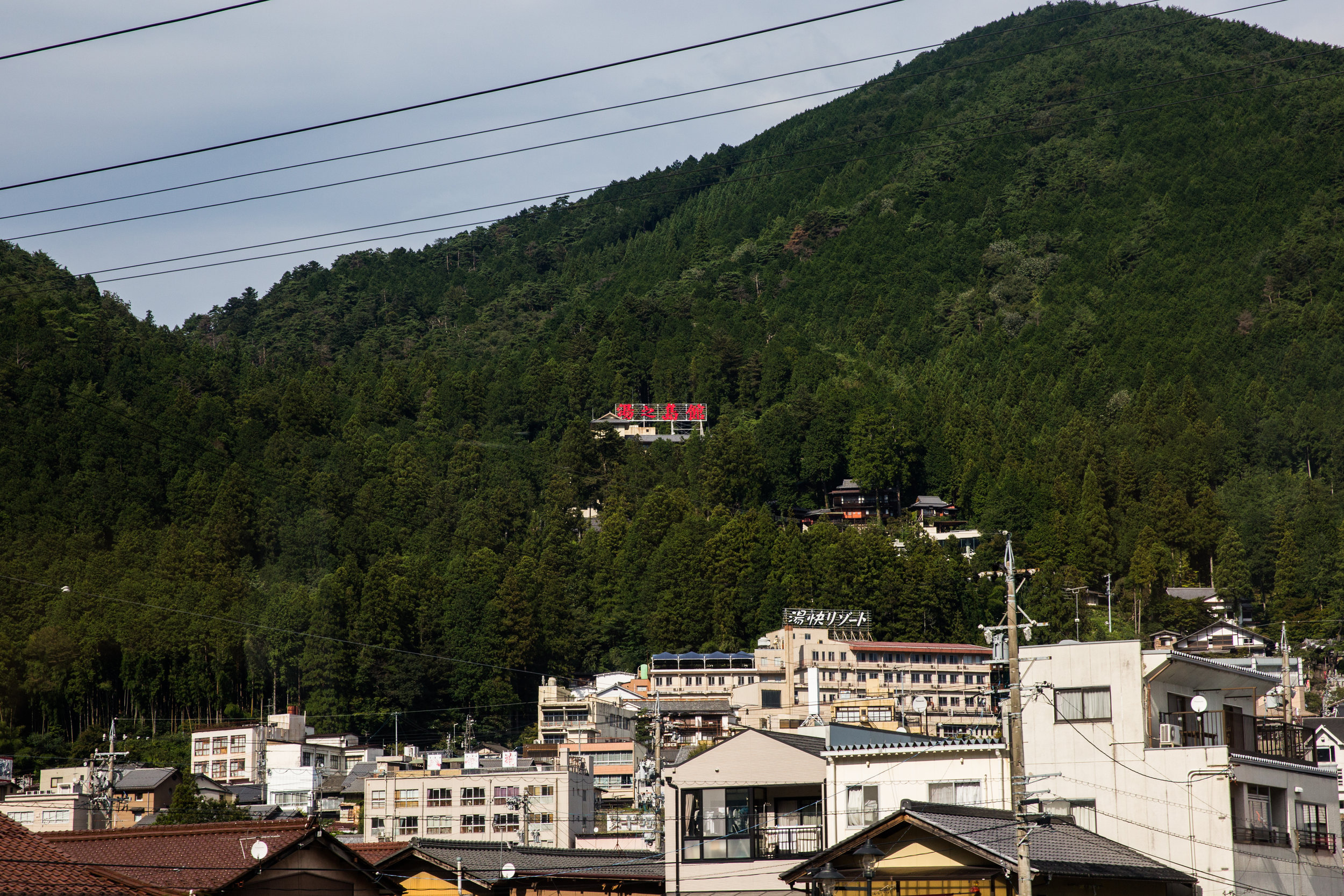

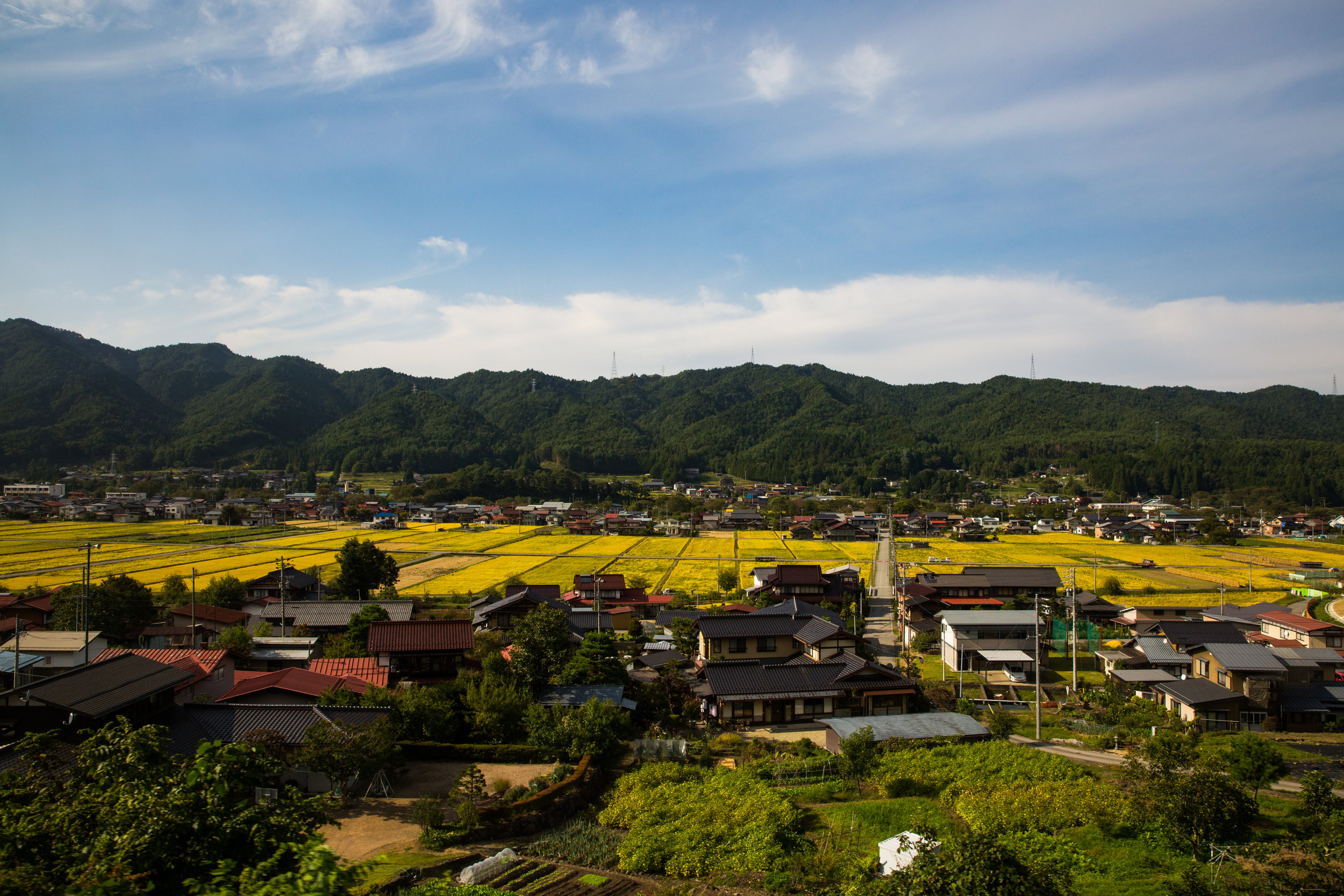
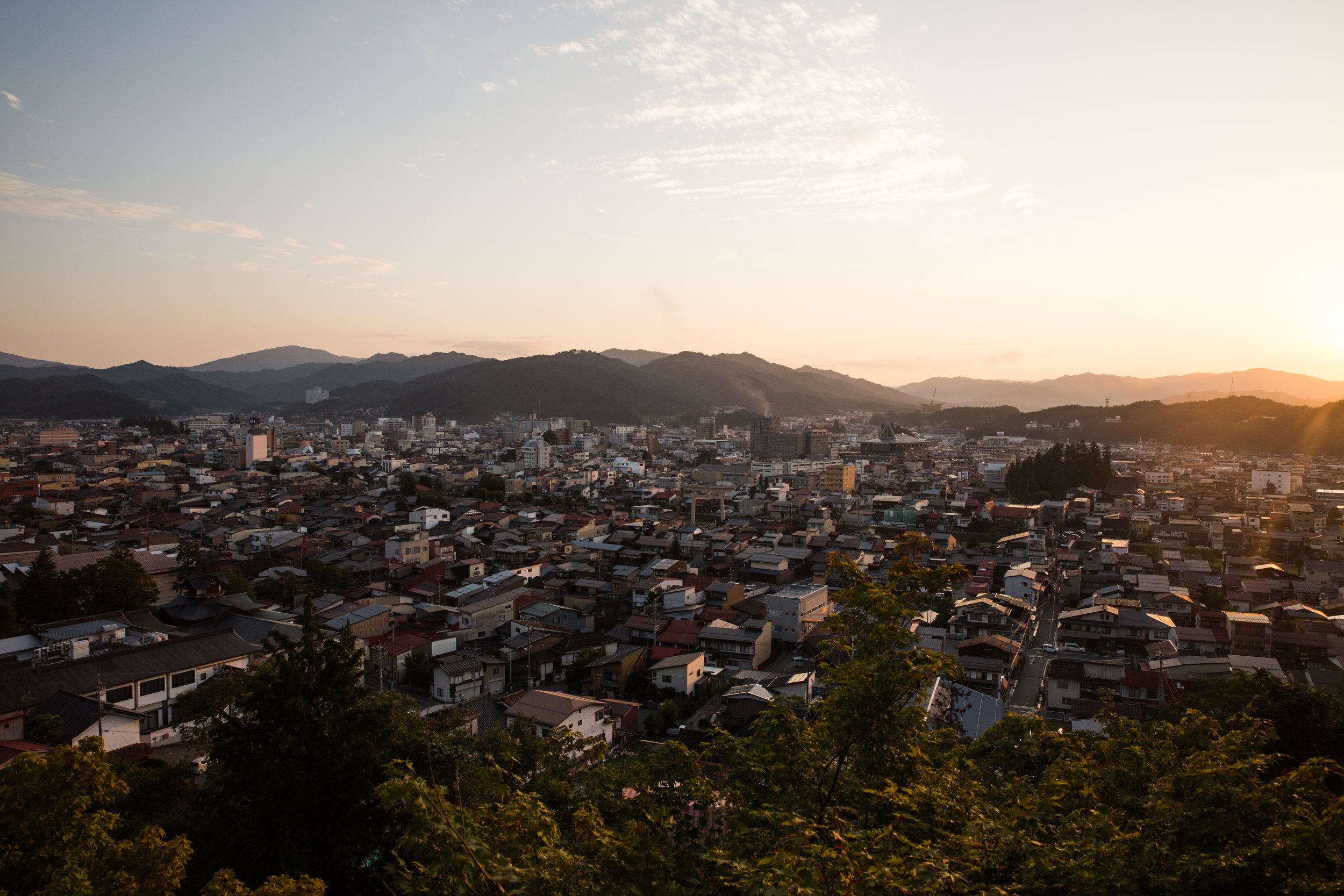
We made reservations at Hagi; the perfect perfect onsen experience coupled with a view of the city that still makes me smile.

While Kobe beef is well known back home, Hida beef is even more prized to those in the area. Much love to the staff at Kyoya down on the Enako River, your hospitality and food will stay in my fond memories for a long time to come.
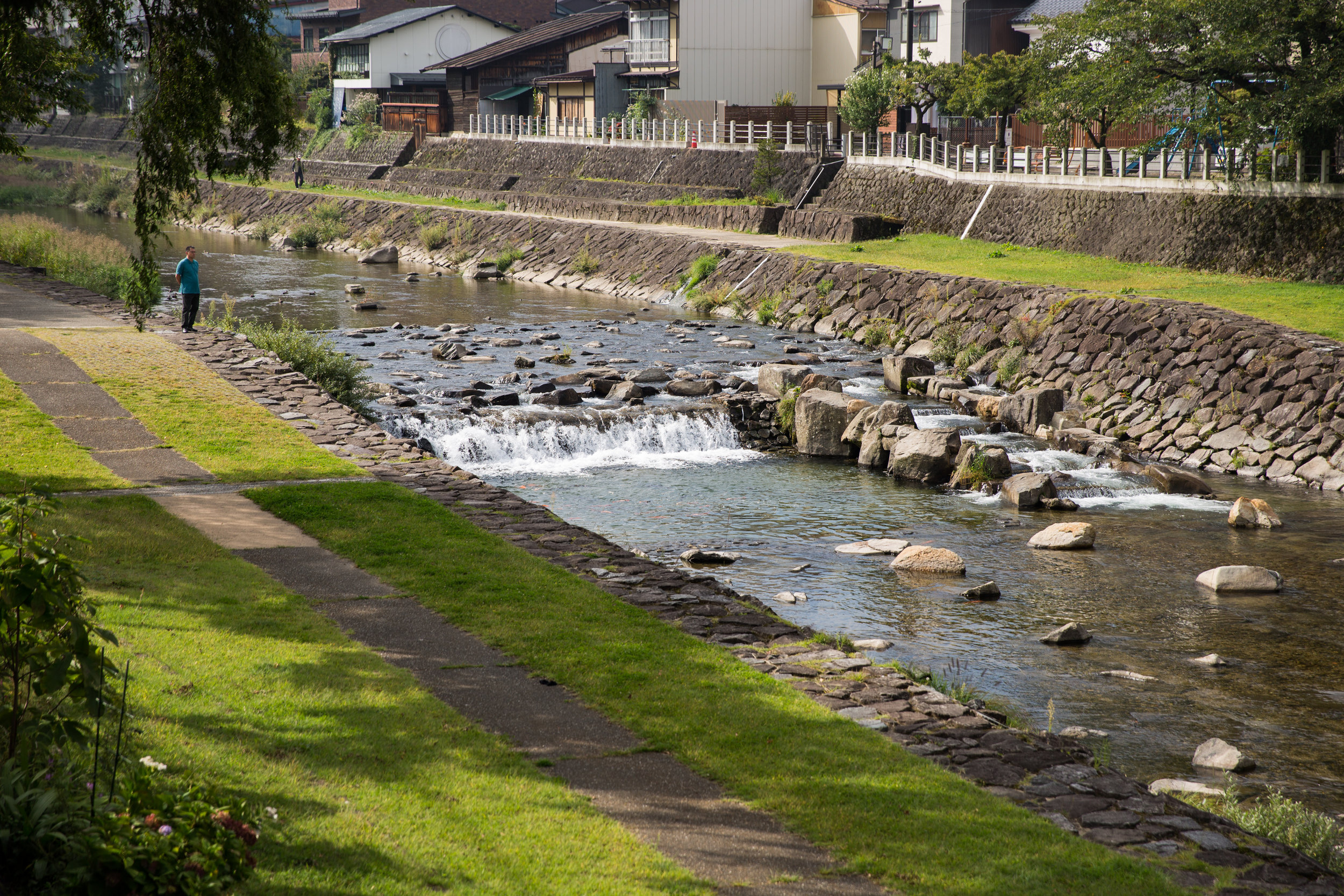

If you’re up for an early stroll, head down to the river to check out the morning market.


It was only fitting that we ended our trip with a quiet night out for Hida beef ramen. Kajibashi cooks are absolutely heavenly.
Over a year later and we still talk about the experience of Japan for the first time. It didn’t need to be anything magic, only itself. It can be as busy as New York while also quiet as a Kansas country road in near perfect transition. The dedication to detail and hospitality was felt and respected in just about every person we met.
I still don’t think I got all of my answers solved, but I at least opened a new gateway of inspiration for the days ahead, with many great places to return and ponder in.
Arigatōgozaimashita!
Sankofa - Part I
Return and get it.

+++
To the Lords of the Ashanti Tribe, to house Duah, Okyere, Boateng, Ennin, Osei-Gyimah, President Nana Akufo-Addo, and our King; Otumfuo Nana Osei Tutu II…or as we know you in our family: Nana Kwaku Duah.
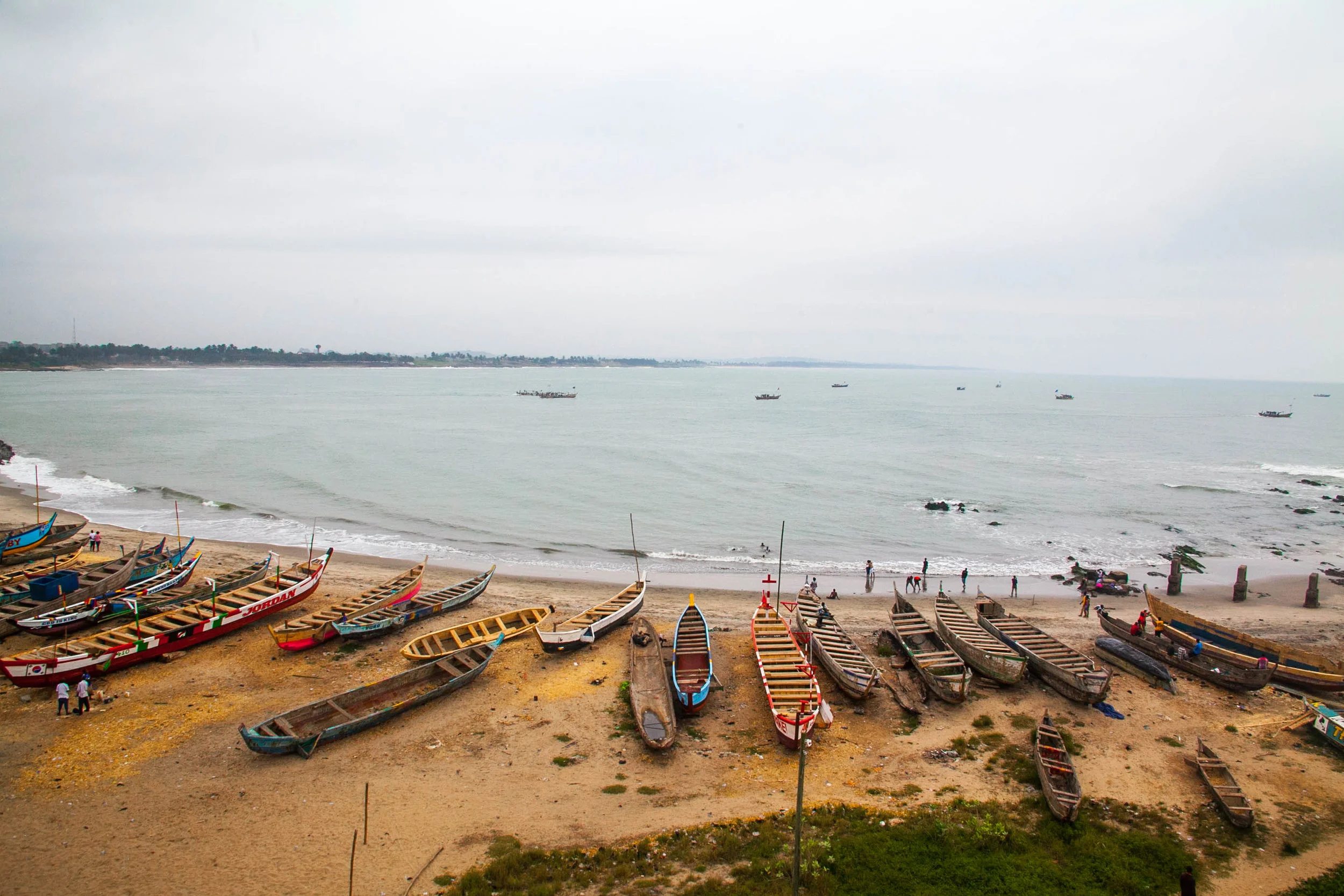
I am John Kwaku Duah II of the Ashanti tribe. The photo above is of the late Francis Burton Okyere and I in our hometown of Moorpark, California in 1999. This was taken at our middle school graduation, and was one of the few occasions we were able to celebrate a victory in knowledge together. So far away from anyone like us, we leaned on each other to stay inspired and good natured, with the burning black star of Ghana as our guide.
Before his murder in 2007, I made a promise to him that I would speak my mind through the stories I’ve heard, lived, and created in my time here if for some reason he never got to visit Ghana personally. Some stories arrived from legend across the millennia, some from wise bards of many walks, some from storytellers, teachers, and preachers. Healers, dealers, dancers, punks, criminals, warriors, mothers, fathers, wanderers, and beyond all built the road I walk on with voice, camera, and pen in hand. This is one of many that I hope will inspire those who walk with us, and who will carry on after us.
Stories are what I live for. They explain everything we need and how little we know at the same time. Stories exist on mediums everyone can understand in some way. Finding those connections is part of what makes the human experience so interesting to me. My parents took me with them in their worldly travels from a young age, and it help build the lens through which I see the world.
This draft was written primarily in January of 2015, but I’ve pondered on this paper and its topics for many years before writing them here.
+++
While I wasn’t born there, my first memories are in Ghana, sometime in late 1988.
The one and only story that sticks out from that trip, is when I explorer the Ashanti capitol city of Kumasi. My father was born there, and while he was out visiting our relatives and giving gifts from the states years later, I took off with some of the local kids to see the sights. My mother (an East Texan) wasn’t exactly calm about her not-even-three-year-old son running off into the wild with strangers in a foreign country, but she was assured that I would be fine. Deep down she knows the bug of exploration and discovery bit me when I was born and never let go.
I remember it was the first and only time I saw a Fanta vending machine. I remember the contrast of colors in the humid environs. Lizards on terracotta walls, wild smelling marketplaces with brightly colored garments, butchers, farmers, and average citizens all around. Other minor details peek through every once in a while, but it wasn’t until recently that everything shifted back into focus, and the adventure I had a brief glimpse of was continued once again.
After a year that I can describe as some serious soul searching and hunt for a purpose in this short but amazing life, going there was the a much needed reminder of where I came from, and where I needed to go.
I touched down in Ghana with my brother Joshua in the middle of August, 2014. You won't find the touchy rules of your local homeowners association here on the paint job of your house. Like everything else in the country, color is beautiful and abundant.
My mother, sister, her then fiance, and niece were there ahead of us in a house we rented months earlier for the two weeks we would be there. Ghana is a big place, meaning we had to be up early every morning to beat the city traffic and cover decent amounts of ground. For the duration of the trip, I up front with our guide and driver Owusu to take in the sights.
The first thing people ask me about Ghana, is if the people live in huts or do they live in skyscrapers? The answer of course is a spectrum across the board from well water stations to Presidential palaces. Some live in beautiful modern structures sprinkled throughout the greater Accra area. Some live in the vibrantly painted neighborhoods I saw from the air. Some live in hand constructed villages across the region.
Two of the professions you see most from Ghana are doctors and Engineers. If you’ve ever been to Baltimore, you know what I’m talking about.
Development throughout the capital city of Accra bustles around the presidential palace, but most of our time in Ghana was spent outside the capitol, in the more remote regions of the country.
Various storage containers turned shops dotted the poorer areas of Accra, serving as the main points of basic foods and supplies in the community we stayed in. Fresh water, fruit, vegetables, cleaning supplies, toiletries, candy and more could commonly be found within a 5 minute was from just about anywhere.
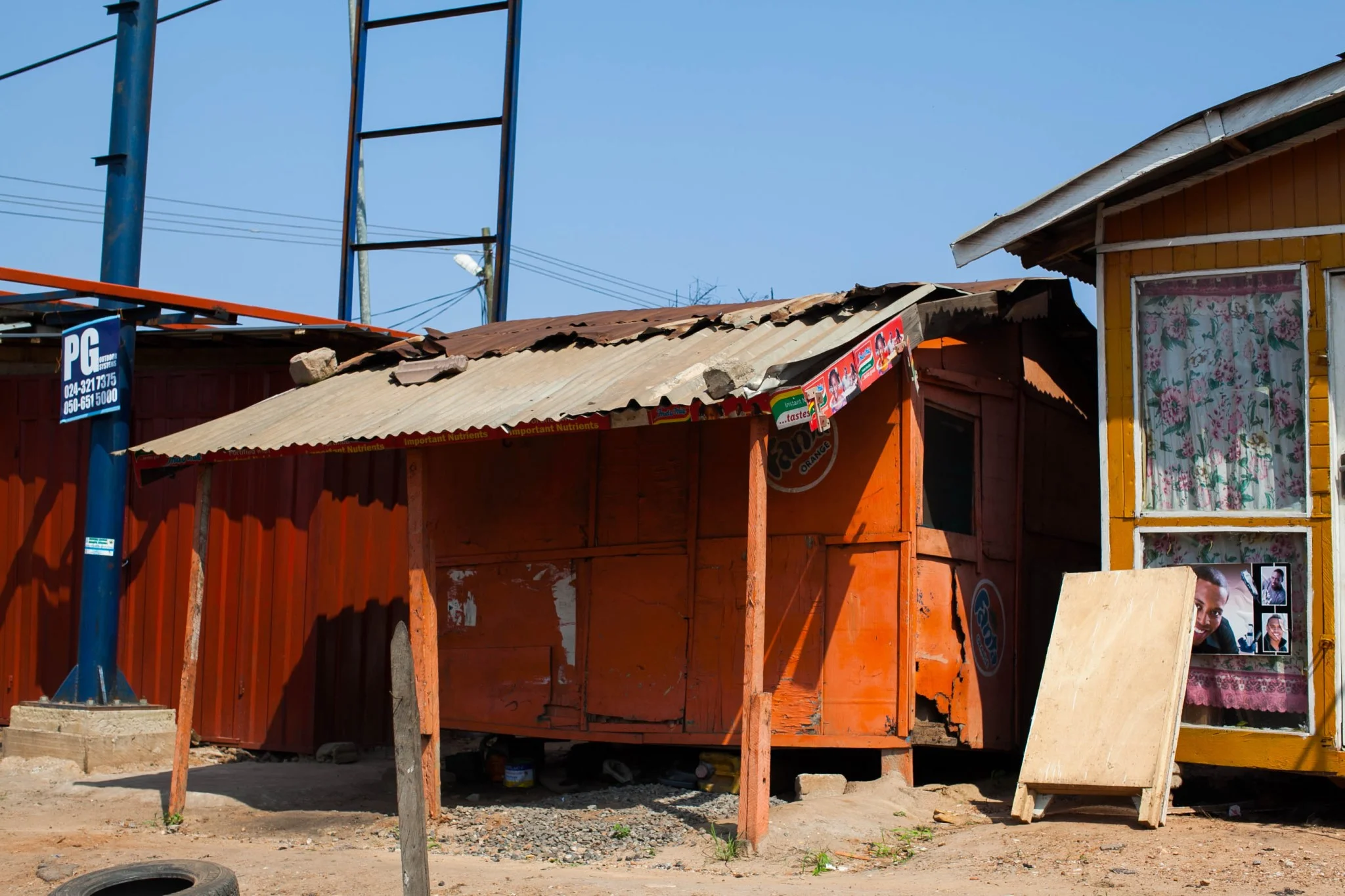
I actually grew more fond of these little shops as time went on. Transactions move so much quicker than at a grocery store, which Ghana also had no shortage of. Something I love about the spirit of Ghana is the seeing the level of commitment people have to providing better lives for themselves despite the cracks in the nations infrastructure. Selling wares independently, or "hawking" as its call was so rampant signs were commonly posted at toll stations to regulate merchant activity on the roadway stops.

Fresh bread, and bags of peanuts being sold to passengers on a city bus.
It took a few days for me to really attune myself to all Ghana had to offer me. I laughed to myself thinking about how most Americans get a two week vacation, but I always wondered how the first week counted. It took that much time just to fully unplug.
Every day we hit the road with a general idea of the sight we wanted to see, and first on my list was the great rainforest of Kakum National Park. Still jet lagged from the trip, every once in a while I would pop out the window with my camera as Owusu would point out another sight tucked away in the forests covering the entire nation.
The roads themselves in Ghana were the topic of much debate in the region I quickly came to find out. Once we were out of the greater Accra region and closer to Kakum National Park, we started to notice large potholes in the road. Some were so bad, that my brother and I called them "Car Ender" class potholes, some up to a foot and a half deep, and twice as wide.
Almost at every spot with a dozen or more potholes, it was common to see young boys filling the potholes with dirt, packing it tightly, and waving to passing cars as they drove by, hands expecting a backwater tariff to be paid. The idea was, tip them for the safe passage they allowed by filling the potholes. By the first four or five times I had seen this happen, it was easy to spot who had actually done work, and who was hoping to get a lucky handout by posting up, shovels in hand at pockmarked spots. I’ll admit, it’s not a bad hustle, even if only temporary. These roads have finally been reconstructed since the article was first started.

Much of the land you see outside cities give way to the native animals, with heavy fines for harming them. Here, some of them pose for a portrait.
Illegal fueling stations were tucked away in the rainforest, seen as a necessity in the area due to the apparent misuse of funds in the supply chain countrywide. At most of the sanctioned gas stations we stopped at to refuel our diesel engine retrofitted Nissan Patrol was met with a head shake of no diesel delivery for the day. Again, it took very little time to notice this glaring disconnect in Ghana's infrastructure.

The town criers at work\play.
When we arrived at Kakum National Park, we waited together for the two dozen other folks to gather, and tour to begin. All around the forest was alive with a heavy feeling of mystery, intrigue and moisture rich air. It seem that any place you threw a seed could harbor amazing plant life.
Chocolate lovers will rejoice in the fact that Ghana produces some of the best chocolate in the world. While it didn't originate here, the Cacao tree thrived here after it was brought over from South America. Cocoa stands as Ghana's primary cash crop, and is the second largest producer of it in the world, second only to the neighboring Ivory Coast.
The fall of the economy in Ghana lately has put farmers in difficult positions, as the stagnant price of cocoa keeps families below the financial survival lines. Many have turned to smuggling their product to Ivory Coast, where it fetches a much better price.
We made our way up to the upper areas are of the forest with our guide to the Kakum Canopy Walkway. While I didn't see them, I read you can rent treehouses high in the forest to get the best vantage point of the forest. After a short walk, we arrived at the opening of the 330 meter canopy walkway system.
7 bridges make up the walkway built by two Canadians in the mid 90's. The park officially opened in 1997, sees about 150,000 visitors per year (and rapidly growing), and takes you as high as 50 meters into the air to look into the gorgeous canopy below.
I never once saw the ground while up here.
We made our way back down, all hands still alive, no falling into the green abyss as we all joked. Kakum's lower levels feature the densest population of African forest elephants. Diana monkeys, Giant Bongo antelopes, several types of butterflies and more also share the area, but poaching has been a large concern in the region.
Spent shell casings, camping remnants, fire pits and old tires are found often in the forest, leading authorities to believe the threat of these shadow poachers is near constant and currently unmatched.
Elsewhere, in the city of Bonwire, we were in search for one of Ghana's most coveted exports; Kente cloth. Bonwire is recognized as one of, if not the main village for production of the beautiful fabric; each color and pattern representing something particular.
Enterprising weavers post up outside the loom house.
I've seen Kente draped over many African Americans during graduation ceremonies and other important social events, usually to color coordination. The weavers moved with a speed and stealth grace that I just plain wasn't used to seeing. Traditionally, the weaving of the cloth is done by males only, with family symbols and designs being retold through cloth over the ages.
Geometric patterns grace the warp threads in colors with a different specific meanings:
black—maturation, intensified spiritual energy
blue—peacefulness, harmony and love
green—vegetation, planting, harvesting, growth, spiritual renewal
gold—royalty, wealth, high status, glory, spiritual purity
grey—healing and cleansing rituals; associated with ash
maroon—the color of mother earth; associated with healing
pink—assoc. with the female essence of life; a mild, gentle aspect of red
purple—assoc. with feminine aspects of life; usually worn by women
red—political and spiritual moods; bloodshed; sacrificial rites and death.
silver—serenity, purity, joy; assoc. with the moon
white—purification, sanctification rites and festive occasions
yellow—preciousness, royalty, wealth, fertility, beauty
Before we departed for our next stop, I exchanged information with the boys in the loom house. I feel like Kente cloth is something that should be shared, and what better way to help usher in its culture assimilation than straight from the source? Little girls outside asked for spare change, and it took a few seconds for me to realize that Kente cloth, like many great Ghanaian productions, have a great export path. Why was it proving so difficult for hand crafted exports to make an impact on a larger scale? The rain layed on us thicker by the minute, and the road back to home base was a long one.
We were a week into our trip at this point, and we still had much ground to cover. I took my turn on the next destination selection and took us to an area known as the Volta Region. Its named such after Lake Volta, the largest man made lake by surface area on the planet. At its highest levels, it ranks 4th largest lake in volume.
In the days ahead, our travels would take us to infamous castle known as Elmina.
The area was first settled some time in the mid 1300's by a renowned hunter, Kwaa Amankwaa while lost on a hunting expedition. As the story goes, he was on a desperate search for fresh water, and found it on accident a small ways inland. He found a small source of fresh water that replenished itself quickly no matter how much the hunting expedition used.
After following the water to its source, he found the lagoon that had fed the stream to his prized water source. Its said that he was so overjoyed that he yelled "Be Enya!" or "I've got it!", which later permanently became the lagoon's name.
He gave the area its original name of Anomansa, or "inexhaustible water" in respect to what the land had given him on that journey. He would return and settle with his people there, to form a town that today still holds true to the fishing and hunting practices from over half a millenia ago.
It wasn't until the mid 1471 that the Portuguese would arrive under the command of Captains Joao Satarem and Pedro D'escobar. Moorish prisoners that they captured after the conquering of Ceuta in 1415 brought the them here, with aims to secure the apparent source of gold in Sub-Saharan Africa, and also to search for a new sea route between India and the Far East.
Europeans of the time were obtaining goods and spices from far away, and cutting out the Muslim middlemen of the Sudan in their trade was an ideal and heavily sought after economic goal.
Many of the chiefs in the area did not want to trade with the Portuguese, but the people were split down the middle: some saw them as gods, while others only trouble. With a cautious optimism, trade eventually began and flourished. The Portuguese bartered guns, gunpowder, liquor, enamel bowls, tobacco, and iron bars and other goods for ivory, spices, artifacts, and precious African gold. Eventually, they wanted a permanent settlement. The town became known to the Portuguese after this as El Mina, or "the mine".
The spread of Christianity was also a very important mission to the Portuguese, if only to counter its spread from Northern Africa to the west coast of the continent.
A regional chief from around this time is quoted in Portuguese records in opposition to a settlement by the Portuguese:
“Though the sea and land are neighbours, are always at a variance and contending to who shall give way; the sea with great force attempting to subdue the land, and land with the same strength resolving to opposite the sea.”
But after pleading with Ansah for the chance of better business and peaceful coexistence, he finally allowed the supply ships to set down their cargo on the mainland when they arrived on January 19th, 1482. Juan Bernardo, an interpreter for Don Diego d'Azambuja had helped negotiate, as he had stayed behind from a previous voyage to the area years later and learned the native tongues.
They came prepared with ready-dressed foundation stones, roofing tiles, and other pre-built parts in their supply to expedite the construction. 600 workers, and over 500 soldiers, officers, masons and other michellanous workers made up the primary construction party. Also among them was a young man named Christopher Columbus, who would stop over ten years later at the castle he helped construct on his way to (what he thought was) the West Indies in 1492.
Once inside, the building tells a different story. The tall walls made for an uncomfortable silence. Small groups of other tourists and their local guides slid through their presentations; getting scolded when the kids in the group wouldn't stop touching the ancient stones of El Mina.
This place was the primary gateway for slaves in the New World that Columbus was on a mission to find. The conflicts on the coast had a direct, if not the most direct impact on African Americans today. Yes it's true, many of us came from these very walls. 400 years later this part of our story is intact. As bittersweet as it may be, pressing on to learn is the most important thing I could have done.
The Portuguese didn't enter the slave trade until the early 16th century, when the New World needed the labor in what we know now as North and South America. The coast of Ghana was controlled by the Fante at the time, one of the many Akan people of West Africa. Chiefs from the Fante signed the rights of trading with other Europeans away, with the removal of an ear being the first offense against this, and death for the second.
In the castle, we listen to our guide explain the horrors of the slave chambers in the castle. Commanding officers standing on balconies above the female hold, selecting women to use for the night. Those who opposed were harshly punished; chained to cannonballs, mutilated, and sometimes outright killed.
Thousands of captured slaves left this place for the West. Some slaves were defeated by the Fante, and sometimes it was from efforts of the Portuguese themselves. For some in opposition to the rule of their new masters, the met rooms like the one above. A stone oven-coffin for the ones who served as a lesson to the others.
The most important, and probably most terrifying room in the castle lay nearly underneath it. We traversed through dark, low passages with headlamp lit, me at the tail of the group. Eventually we made it to room that I could name before he did: A room of no return.
The gate ahead of us was known as the final path to the small ships carrying cargo, living and otherwise, to the larger ships in the bay. I can't describe the sense of dread I felt standing in this room completely. You didn't have to touch the walls, because the haunt of what happened there reached out to touch us instead.
There wasn't much talking going on among us, but it was one of those tense moments in a room where you know brains are heavy churning with the situation. I took a deep breath and looked out the gate. Kids play soccer on that beach now, a happier time in stark contrast to the centuries before it. I chuckled at the severe sense of irony and headed for the exit...the way we came of course.
The part where I scratch my head further in the history of the castle, comes after the Dutch eventually took the castle from the Portuguese. Up to this point the Dutch hadn't been involved in the Atlantic Slave Trade, but when they eventually seized Elmina from the Portuguese, the structures and the habits created there would continue. Two ounces of gold would be paid in tribute to the coastal African rulers for the trading done at Elmina throughout the slave trade years. But what of the other tribes? Surely they couldn't all believe in this state of slavery and trading.
To the north, a powerful tribe under the reign of the ruling Denkyira tribe responsible for trading with the Europeans on the coast, was preparing to reshape the face of present day Ghana. A warrior nation living among the shadows of the deep forest, controlling swathes of gold filled mountains. This tribe is known as the Ashanti.
The Ashanti Empire officially came into being in 1701. Before then in the mid 17th century, an Ashanti chief named Oti Akenten began to assemble a loose confederacy of leadership to oppose the Denkyira.
The capitol of the Ashanti lay in the city of Kumasi, and was the next location to visit on our short trip to the land of gold.
It was a strange feeling being there. Kumasi is my fathers hometown; the nexus of my people, and holder of a special accolade in my life as the furthest back in my life that I can remember.
We made our way through the legendary Kejetia Market, home to 10,000 stores, and boasting the title of largest market in West Africa. If you wanted something to remember Africa, you wouldn't find a better place in thousands of miles. *Update 2019 - I haven’t seen it in person yet, but a massive rebuilding of the market is nearly completed. Consider that at the top of my list for the next visit.*
People ask if I was born here, but I was born in California: My dad decided to take my mother and I along on a trip to the motherland when I was a wee 80's baby, about 2 or 3 at the time. Mom likes to remind me of how bad she freaked out when me, the traversing toddler, ran away for the day with some local children.
Some neighborhood kids and I fled the compound of my father's childhood home and into the marketplace scene. All the while my mom comes to learn of my expedition while getting her hair done. My father was out delivering gifts and money to the family in different cities, as is customary for the children of the empire who found success outside its bounds.
She jumped up from here chair, but family immediately assured her that "absolutely no harm will come to him. He is a smart boy and with safe people running around." Obviously her heart attack didn't end until I showed up hours later with a plethora of stories.
I had talked to people in bright colors, I saw a Fanta vending machine for the first time, I told her about how cool it was to see the lizards run up the walls, and I'd even seen a goat lose its head at the butcher shop. Sometimes I feel like I can spell the same spices in the air from that day.
The more time I spent here in Ghana, the more I understood the way I face the world the way I have for so long. We are a strong tribe with warrior roots and respected talent in social structure that still remain from the founding days.
The Ashanti are a matrilineal society, with many powers and territory being passed down through the women of our society. There have been female rulers as well, the most famous being Yaa Asantewaa. She led a rebellion against the British starting in 1900, and was responsible for keeping much of the empire alive when many of its members were captured and sent to Seychelles. I've always found it important to lift up the women in society who fight for a better society. Without them, no empire can grow.
We stayed in Kumasi for a day and a half, and as we visited the landmarks and museums, ate at the places my father used to eat, and walk the streets he used to walk. I can't find another way to describe it to you other than it felt like another home. It was that straightforward.
Brick walkways. Bright colors. A bustling marketplace with thousands of stories. It felt like you were a part of the community no matter how quiet of a corner you found. Graffiti was rare, and instead you normally found ornate stone painted scenes along city walls, mixed into the urban sprawl of the Kumasi streets.
It became normal to see superb feats everywhere you looked, whether it be someone balancing seeming impossible amounts of cargo on their head on the roads in between markets, or babies strapped fearlessly to their mother's back, who holds on to dad, while riding on a motorcycle as a family of three.
It was perfectly normal to see a group of kids performing acrobatics and parlor tricks on the beaches facing the warm Atlantic. Star beer was plentiful, and came in to price at under a dollar US for a pint. Relaxing and rejoicing are things we've learned to do well in the calmer years of the empire it would seem.
In my travels with my family through Ghana I admit, it found it hard to relax a good amount of the time. People ask me if it felt like a vacation, and in some ways it was. It had the ingredients to one anyhow: friendly people, beautiful weather, inspiring architecture and craftsmanship to behold, amazing food, and no shortage of history-mystery for the those looking to know the inner workings of Ghanaian society. I was home.
Every day, bright and early (for better or worse) we rose to the occasion of the day. Some days it was a trek into the heart of a jungle, other days it took us to a beach coupled with the warm wind of where the Atlantic wind is warmed by the Equator not far away.
The air in Ghana is a different type of tropical paradise, and I genuinely agree when I read about Ghana being one of the most beautiful places to visit in Africa. Every day brought staple seafood and starches to the belly, spices supreme on red snapper, and even a can of Coca Cola with my Cousins name on it with my chicken.
I rode on big brown boats to Bojo Beach to have beers with my little brother. We ate overpriced lobster just to say that we did it.
We collected bottle caps and made poorly timed Fallout jokes. We learned how to negotiate in the marketplace, and throw on the local accent to get out of awkward non-sales.
Walking through the marketplace of the Centre for National Culture, you can find gifts and trinkets for sale in just about every genre of collectible. If you have time to come back the next day, I highly recommend having something custom made from wood, and polished to your liking.

You could spend all day in the Centre for National Culture.
If you’re lucky, you’ll run into one of the primary proprietors of the market, who asked I code name him “The Boxer”.

The Boxer, walking me through various stores and explaining the history and flow of the market.
After placing an order for a customized speaker’s staff in the market, I made my way a few blocks west. Walking through the polished marble walls, you’re greeted to the horn bearing heralds lining the path to the tomb of Kwame Nkrumah; Ghana’s first president.


“Forward ever, backward never.” - Kwame Nkrumah
Known for leading what was formerly known as the Gold Coast to independence from the British in 1957. The road to his victory was mired in international espionage, sabotage, and an eventual coup by civil opposition. His political clout ran among the highest ranks in the world; JFK a close friend, dancing with Queen Elizabeth, winning the Lenin Peace Prize in 1962, and existing as a founding member of the OAU. If you really share an interest in learning at the efforts made to decolonize Ghana, and find out how best to see where it’s headed next, studying Nkrumah may be your gateway to putting the pieces together.

The square was commissioned by Kwame Nkrumah to honor the visit of Queen Elizabeth II. Construction ended in 1961 and it was named "Black Star Square".

The archway commemorating the independence of Ghana in 1957.
400 years after slavery, what new independence do we find these days as children of the diaspora? What can we bring home to help shape the future? To me, it seems like our minds are the most free concept to have developed in the years of blood of so many empires has been away.
I’m proud of the legacy of my people, and the history of our collaboration around the world to work toward a better future. All we can hope for is the chance to build on top of what we’ve seen, both good an bad. Crossing aisles and oceans can be done for positive in the motherland, and I reflect on an idea my father once told me: there are good and bad people in the world, but you must learn how to communicate with them both to make the future.
As always, I hope a plethora of houses, both Ashanti and no, can walk together in brightly lit days on the road ahead. To the Ashanti delegation, my family hasn’t forgotten what we set out to do, and we will carry the torch of knowledge around the world for another millennia.
One day soon, I’ll walk through the northern forests again, feeling the spirits of the past lay a hand on my shadow, causing pause and pondering on our future.
-John Kwaku Duah II
Cuna de la Revolución
With citizens of the United States able to travel to Cuba for the first time since the late 1950's, I took a journey into the cradle of the revolution.
Until recently, the island nation of Cuba has been shrouded in mystery for the majority of United States citizens, following the success of Fidel Castro's uprising against Fulgencio Bautisa's Cuba at the end of the 1950's. After a series of violations and affronts to the Eisenhower administration at that time, the US President placed official embargoes to Cuba, while also formulating a plan to take Fidel out of power.
Just a few months into his presidency, Eisenhower's successor John F. Kennedy signs off on Eisenhower's final play against the dictator 90 miles across the water. Known commonly as the CIA orchestrated Bay of Pigs invasion, the move to usurp Castro on April 17th, 1961 would fail spectacularly only three days later on April 20th.
Around the same time, the United States parked Jupiter missiles with nuclear warheads meant as a flex move against the Soviet Union; a strong Cuban ally. The response from Russia was their own placement of missiles in Cuba, in part of what we know as the Cuban Missile Crisis. In the decades following, the average American heard little about Cuba, great baseball players and the Elián González incident in 2000 not withstanding.
During Barack Obama's Presidency, layers of the tension peeled away in diplomacy between him and Fidel's brother Raul Castro. Cuban Americans were the first to be allowed passage back home starting in 2009. Then, students and religious missionaries took the stage. Now on a culture exchanged grounded classification of "People to People", United States citizens can travel to a true cradle of revolution.
Decades of isolation from the Cold War finally able to thaw out, and I'm grateful the Cuban people shared their country with us with open arms and a case of cold Bucanero. It will take some time and research before I'll full be able to express my feelings on Cuba as a whole, but I wanted to share choice photos, and information I think may help if you're headed there.
Before getting to the photos, I'll address the FAQ's I've heard about Cuba below from my fellow United States citizens:
- How do I get into the country legally as a United States citizen?
-You'll buy a plane ticket through your online portal of choice, after which you'll likely be contacted and directed to your airline's visa page at Cuba Travel Services via email. For example, here's the American Airlines page I used. At the time of this writing, the price is $85, and you'll get your visa in the mail with a copy of how to fill it out.
After about a week I was called by Cuba Travel Services to verify my selection of visa request reason, which you'll have chosen from on their website if you purchased a visa there. Unless you're headed there for a particular allowed purpose (Journalistic Activity in my case), you'll choose the Educational\People to People visa. Essentially it states you're in Cuba on the notion of culture exchange.
If you don't buy it online, you can purchase one at the gate before your flight that takes you into Cuban airspace. Cuba Travel Services will have a kiosk with a visa price set to $100 right in front of your gate.
That's about it.
- How does the whole money thing work down there for us?
Unfortunately your plastic will be rendered completely useless, so take US dollars with you. We changed out our money to the Canadian dollar, but Cuban officials will likely give you shade, and ask if you have US money instead in cold jest. Plus, the conversion rate was a pain to keep track of anyway.
I'm not wholly sure the economics of it, but the mindset of most of the Cubans we met was to back their banks with our money, ensuring our overall relations to move forward. You'll be penalized pretty much no matter which way you convert your money, so do as you will. Most importantly I recommend $800 cash per week's travel, unless you have some extravagant excursions planned.
- How did you find a place to stay, and get around the island?
We booked all of our stay through AirBnB. Since people from across the world have been visiting for decades now, renting systems are fairly well established. Hostels are an option, and you'll see signs for them regularly, but that I can't speak to.
Either way, your host will likely be the best source of information. Hosts are happy to set up rides around and outside of Havana, since being a taxi driver is more lucrative than being a doctor at this point it seems. With business, Cuba remains largely word of mouth due to the lack of a strong telecommunications infrastructure. Social media promotion won't arrive here for some time.
I highly recommend getting a physical travel book to bring with you. We took the DK Eyewitness Travel Guide and it comes complete with walking and driving maps, day plans, things to expect, and a good deal more.
- What's the food\drink situation like?
Unfortunately, the best food is shipped off of the island, due to the government power have first dibs on the best of crops and supplies. I'd say stick to the Cubano sandwich, or black beans and rice as often as possible. Average meal cost is $5, although you'll pay double that at any Trip Adviser labeled spot.The average cocktail price is $2, and bartenders pour HEAVY.
- What's the primary language?
Spanish speakers will have an easy time, however I'd say no more than 15 percent of the people I interacted with spoke English. Google translate doesn't work on the island, so you'd better practice. Honestly though, I returned home with a renewed itch to learn and travel to more Spanish speaking territories after going to Cuba.
- What were some of the things you guys did you'd recommend?
1. Visiting the museums in the heart of Havana.
2. Walking the city streets of Havana, popping into various bars to have a drink and stay cool, or to catch a jam\dance session on a city corner.
3. Taking a tour of Havana in a classic car.
4. Dancing in a cave club on a hilltop in Trinidad. This one is a mystery you should find out by asking around town. Trust me, it'll be more fun that way.
5. Horseback riding through Valley de Viñales should absolutely be on your list of things to do.
6. Spend at least one evening at Fábrica de Arte Cubano. It's feels like a vision of Cuba's artistic and social future.
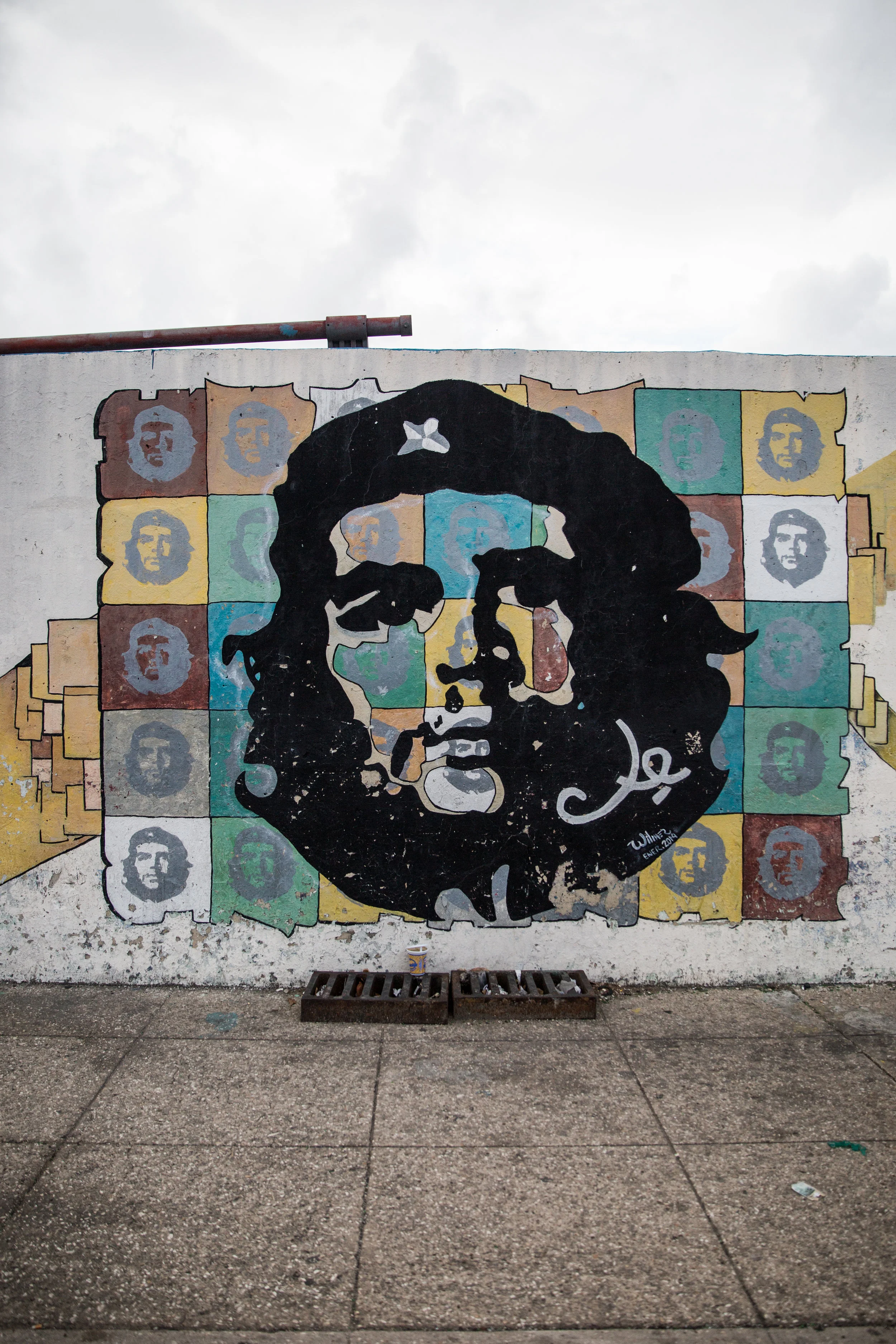
Approaching Havana from Miami; patches of redistributed farm land stand testament to the policies of FIdel's revolution. One of the duties of the infamous Che Guevara after the revolution was to head the Instituto Nacional de Reforma Agraria, a government agency created to handle infrastructure tasks like road building and protecting the order of land redistribution and re-tasking where needed.
Cab drivers have a smoke while waiting near terminal 3 at Havana's José Martí International Airport with a Russian made classic.
Morning in Havana. Roosters are often louder than the traffic.
Brutalist architechture is apparently everywhere in Havana, and dotted in parts of smaller cities.
The original impetus behind my journal to Cuba: documenting classic cars from the last era of American business partnership. Many of the car parts in these cars have been replaced with home made spares, and mismatching parts. Overall though, very few of the old beasts were broken down on the road.
José Martí Memorial tower stands at 109 meters (358 feet) tall in Plaza de la Revolución. The Plaza is a centerpiece of Castro's Cuba, with many important rallies being held there since its completion in 1959.
Cars gather regularly in the square, and take a break while tourists of all walks admire the classics.
Jungles push up against Havana's city limits; a lush green nearly year round.
Our wheelman from downtown to the outskirts. He displays what I believe to be an MS-13 tattoo on his hand with pride.
Located on the Malecón, the US Embassy had been shuttered for over 50 years until the Obama presidency. Even now it stands fairly quiet it seems.
After a public formation, the special police gear up and salute their CO. Some are glad to see me.
Outside the Havana Cathedral; one of the 11 Roman Catholic cathedrals on the island, and completed in 1777.
The Havana Biennial Art Exhibition takes places every two years; its primary purpose to bring about the Cuban contemporary art circles.
The hammer and sickle; the iconic symbol of Russia's Communist Revolution. It was commonplace to see these along with Russian architecture and vehicles.
A cocotaxi baking in the afternoon sun. While they only carry two passengers, they are generally less expensive but much louder than a taxi.
A bust of Ernest Hemingway by José Villa Soberón sits inside the El Floridita bar. It served as one of Ernest's favorite watering holes from his time there between 1932 and 1939. While it wasn't the birthplace of the daiquiri, it is known as the cradle of it with bartender and later owner Constantino Vert at the helm, coupled with Hemingway as the resident tester. The bar still stands a powerful testing ground for juice based cocktail pros.
Em danced just about ever chance she could get with the constant live beats found about Cuba.
A city patrol talks about baseball.
Cuba had some of the most unique paintjobs I'd ever seen.
The capitol currently under renovation. notice the clean walls and pillars on the right hand side, with the left hand side next for its close up.
An old mural of a cartoon was covered up, over it a scene of Spanish ships, and African slaves beating drums and floating with spectral chains.
Landlines are abundant in Havana, as cell service is very limited throughout the island.
The 99% pulling down the corporate giant. Written all over are the names of the biggest companies in the world.
Any given afternoon you can get in on a futbol game.
The Malecón is the most popular spot in Cuba. Crowds of people hugged the sea wall for miles to watch the sunset on a warm Sunday evening.
Founded in 1514, sunset in Trinidad de Cuba was humbling every time.
The coblestone streets still remain, couples gorgeously with the washed out pastels that Cuba is known for.
Los Pinos takes a break while a young Cuban boy admires the trio.
Technical know-how is a must in Cuba. Fresh replacement parts for most cars are near impossible to get.
Kids play at school while we trek through the Escambray mountains.
Revolutionary backyards.
Most of the natives in Cuba rocked a greaser cut with shaved sides, but Dan stuck to his El Papa look.
An average day after school in Trinidad.
Rain rolling into the center of Trinidad over one of the many churches in the city on our last evening in Trinidad.
Apparently Mexican coke isn't as much a rarity in Cuba.
What most people will tell you is the most impressive scene in Cuba: Valley de Viñales. Limestone cliffs called mogotes raise from the floor of the tobacco farms of the basin.
Katie andTequila riding through an old town near the farms of Viñales.
At the house of our guide, his wife shows us their arabica bean treatment process.
A lemon being cut for open before making the afternoon summer sipper of your dreams.
We poured fresh sugarcane juice and rum into the lemon, the squeezed it to let the juice from the lemon mix in. Sip and repeat.
Our wheelman to Viñales was a man named Jiovannis, and his car was not only the best kept I'd seen, but his 80's music collection was pretty impressive. I have his contact information should you want to make the trip to the Valley. (You do.)
The Mural de la Prehistoria walks us through a chart of evolution in vivid color.
A storehouse of Cuba's crown jewel, the tobacco leaf. It takes 6 months from start to finish to complete the entire cigar making process.
The stem of the tobacco leaf contains 95 percent of the nicotine. Most Cuban's remove this in their rolling process. A fitting end to the primary part of our adventure.
I found Cuba and it's people to be profoundly active and driven. Even in a communist state, the push for a better world seems endless, and that's not a problem in their eyes. Its breathtakingly bittersweet to be enveloped in a world where community is titanic, but the supplies to reach your full potential are under a dictator's rule.
The more time I spent there, the less meaningful the embargo we have with Cuba felt. 90 miles away lies (at the very least) a portal to building blocks that Cuba needs to advance its infrastructure. The overall sense of thought towards US citizens in Cuba was overwhelmingly positive, but I never got the sense that Cuba will be as negatively changed as people in the US think it will become if the embargo is lifted.
Sure, pockets of all inclusive hotels will pop up, but luxury has existed in the heart of Havana for those who want it for some time now. I hope to see Cuba grow into a free state now that US-Cuba relations have begun to ease, and access to information increases.
This adventure further inspired me to take bigger leaps in the alcoves of the world to discover knowledge from around the globe. I'm also inspired to dig deeper into the particulars of Cuban society, and again visit the island someday with eyes open. Feel free to post any questions here, and make your way to Cuba while the classics still rule the streets.
Visiting Southern Iceland 2016
Travelling Iceland's Southern Shore.
Leif Eriksson's statue outside of Hallgrimskirkja; given as a gift by the United States in 1930 to commemorate the Icelandic Parliament's 1000 year anniversary.
In the fall of 2016, I ventured to the Nordic island of Iceland. With only a week there, we limited our adventure to the southern side of the country. The official records say the first Icelandic settlements were founded in the year 874, when King Harald I of Norway looked to expand across the North Atlantic.
Since then, the arctic nation has grown primarily in the capitol city of Reykjavik, with a total country population hovering somewhere around 323,000 total in a area near the size of Texas. The island plays host to what must surely be some of the most beautiful landscape Earth has to offer. The harsh winds and weather are matched only by the gorgeous environs that range from the low altitude volcanic marshes to the windy peaks of Vesturnhorn.
While another trip to Iceland is certain for me in the coming years, the south side of the island kept us more than busy. My main suggestion for those looking to travel there: if your destination is 2 hours away, give yourself at least double that time to get there, as you will be stopping repeatedly to snap photos along the way. The Ring Road is mighty, so take your time. Luckily for me, I had a sassy navigator in of my close friends, Jessica the Red.
Posted below are some of my favorite locations, with a complete gallery of my top shots while in Iceland.
First snow of the season sprinkled softly over the city on the morning of our road trip east.
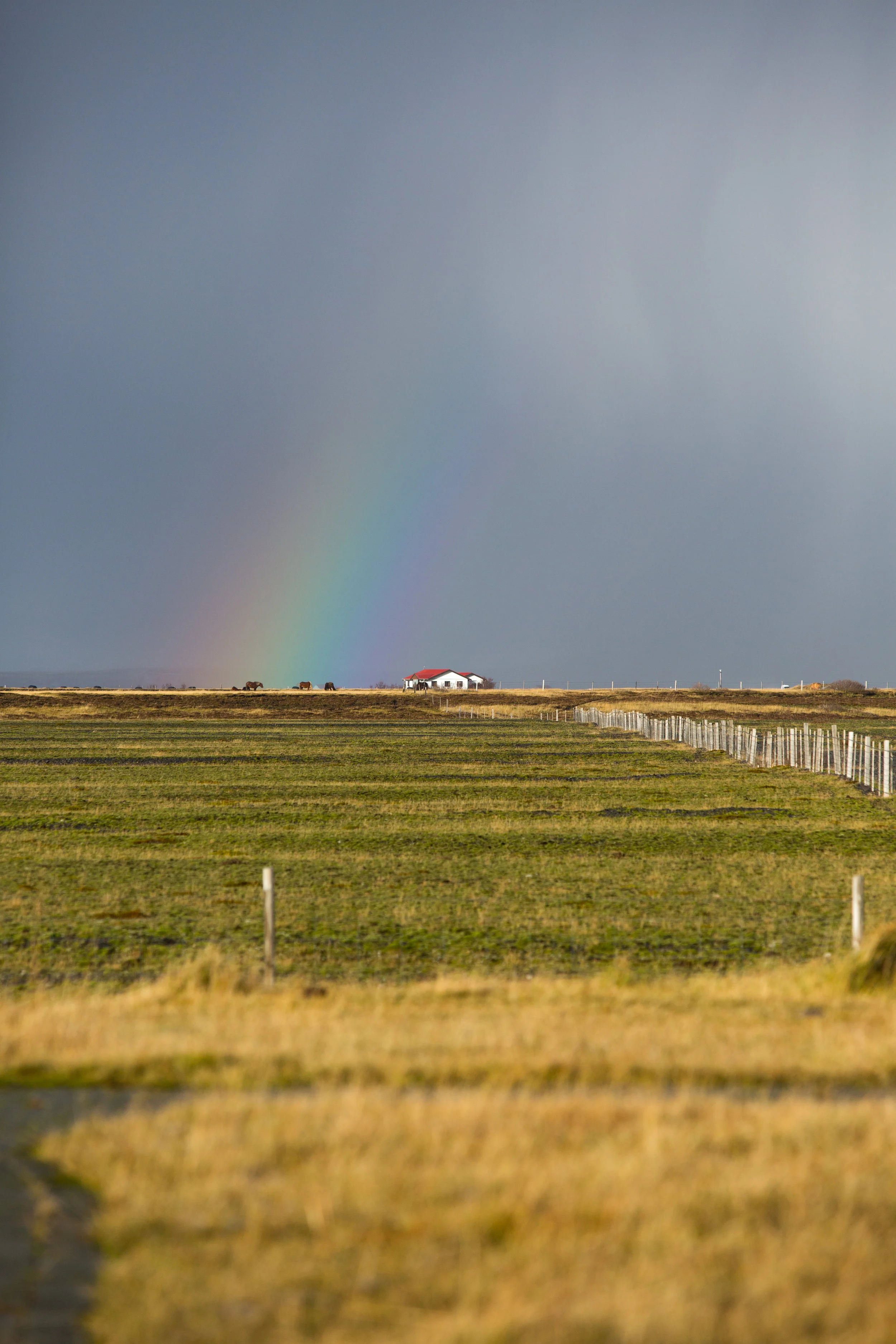
Looking to the southeast near Hveragerði, before decending into the primary stretch of the southern RIng Road. The sun shines much brighter, warming you even through your windshield. Speaking of wind, its intensity allows storms to roll in quickly and with little warning. Coupled with that and a sun that only lives in the South, the day length felt more akin to something out of The Elde Scrolls series.
In the distance, Seljalandsfoss spills water from the glacier and rains of the day. Waterfalls are everywhere here, each worth of stopping for admiration. It wasn't quite snow, but bits of hail hit us on and off in the minutes trying to frame a decent photo from afar.
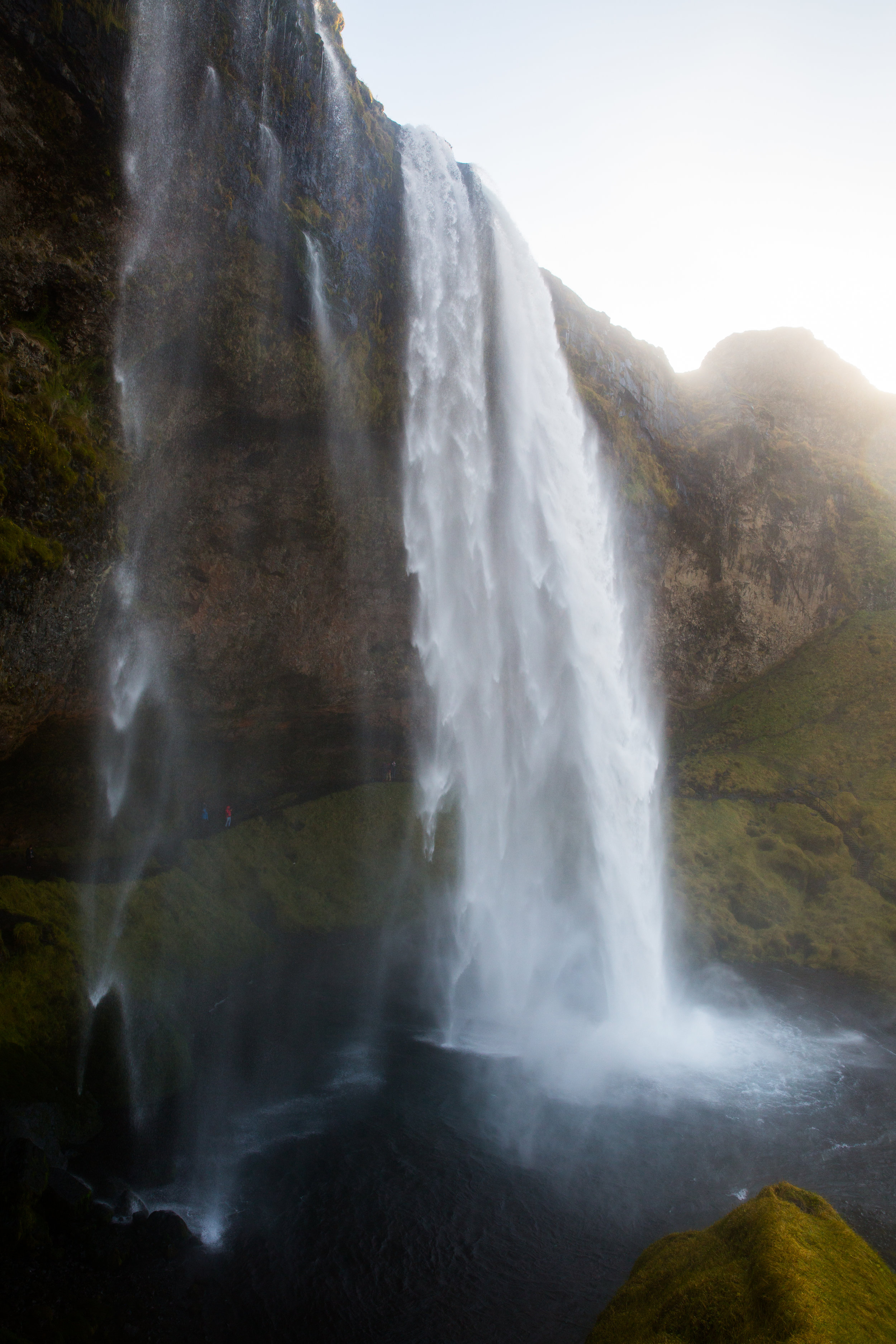
Giants standing among giants. Seljalandsfoss is a 60 meter waterfall that is part of the Sejalands River. Born from the volcanic glacier Eyjafjalla, it's normally know as the waterfall that you can walk behind through a carved mountain wall.
Easily a top pick from our adventure. Eyjafjalla from across the fields. A unique feeling to Iceland: the sense of new adventure with nearly every view.
Icelandic turf houses are as beautiful as they are crucial for survival in Iceland's climate. many Scandinavian buildings were traditionally made from Oak wood, but with scant resources during expansion (Birch wood was more common), using the landscape to your advantage became a regular occurrence.
The small coastal town of Vik met us with heavy rain, the air smelling faintly of wet ash. Wind made salt crystals settle in any crevices not tightly wound in rain gear. The towers in the distance are named Reynisdrangar; formed of ancient basalt deposits in the area. Nordic folklore says two trolls tried to drag a ship to land one murky night, but were turned to stone when sunlight hit them, trapping them here indefinitely. The entirety of the beach is a fine black sand chilly paradise from the vast swathes of volcanic ash spilled at the edges of much the Icelandic coasts.
Not long after driving through VIk, we were met with a slithering view of Skeidarajokull. The metal is left over from Skeidara Bridge that was destroyed after the Vatnajokull volcano eruption in 1992. Flooding didn't do the bridge in, but the boulders the size of houses made quick work of the bridge. This monument was created in remembrance of how infrequently mother nature plays games.
The ride off the Ring Road to Vatna Glacier immediately made me think of Ace Ventura 2's drive scene, the Rav 4 bouncing around every few seconds from tire-ending potholes. We pulled up to at what first feels like what a Klingon planet might convey; desolate, harsh, yet epic and full of honor. The rain wind whips you with a wide reach, echoing through the canyons with an eerie whistle.
Glaciers turn blue due to their inability to scatter low-wavelength light of this hue in the spectrum. Combined with the volcanic ash-sand from the ancient living volcano, the color scheme here hit me as worth the price of the trip alone. Glacier cracks were starter guns sending off each visitor on their journey. After a salad and tunafisk sandwich with blue in view, we moved on.
Driving through the night is almost impossible to avoid if you plan on stopping to see a majority of the sights on more than just a daytime pass, but it's dangerous. After a quick stop for groceries in Hofn, we made our way to a farm playing host to a dozen or so cottages with the above view to greet us in the morning.
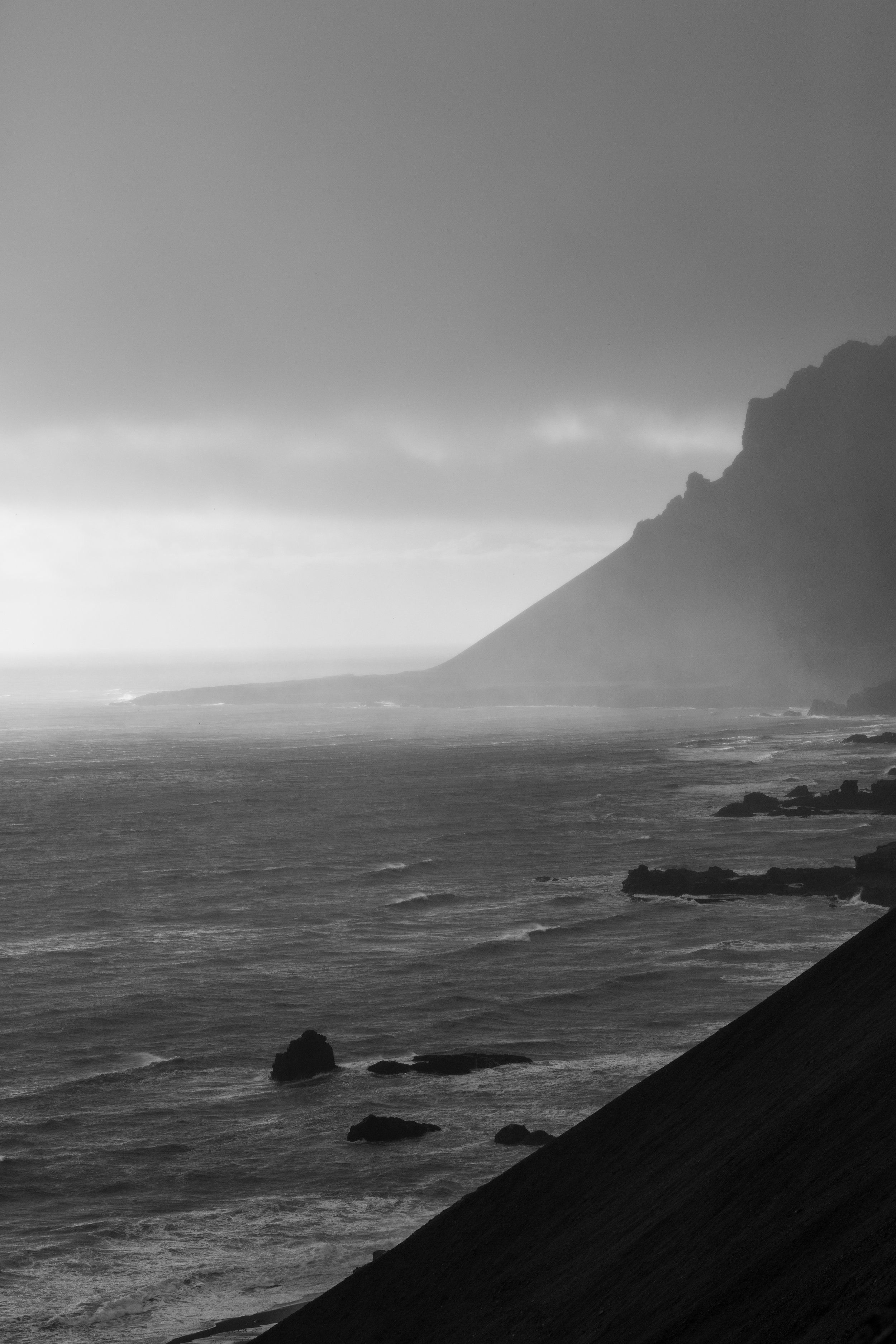
In a way, it was better that we missed the savagely gorgeous cliff sides we witness on the turn around trip back to the capitol. The winds were so offensive we had to move the car twice to have a safe angle to exit. If someone told me that a dragon turned these cliffs black, I'd believe it.
Vesturnhorn Moutain stands proudly against the morning. This was the most beautiful example of paradoxical sight of volcanic rock covered in bright green moss that I'd seen and would see on our trip. How did it live in these chill winds?
Hofn is a fishing village of roughly 2100 people. Above is the Seamen's Monument, to pay tribute to those lost at sea.
Hofn is also home to the best langoustine I had while in Iceland. They even have a drive through window.
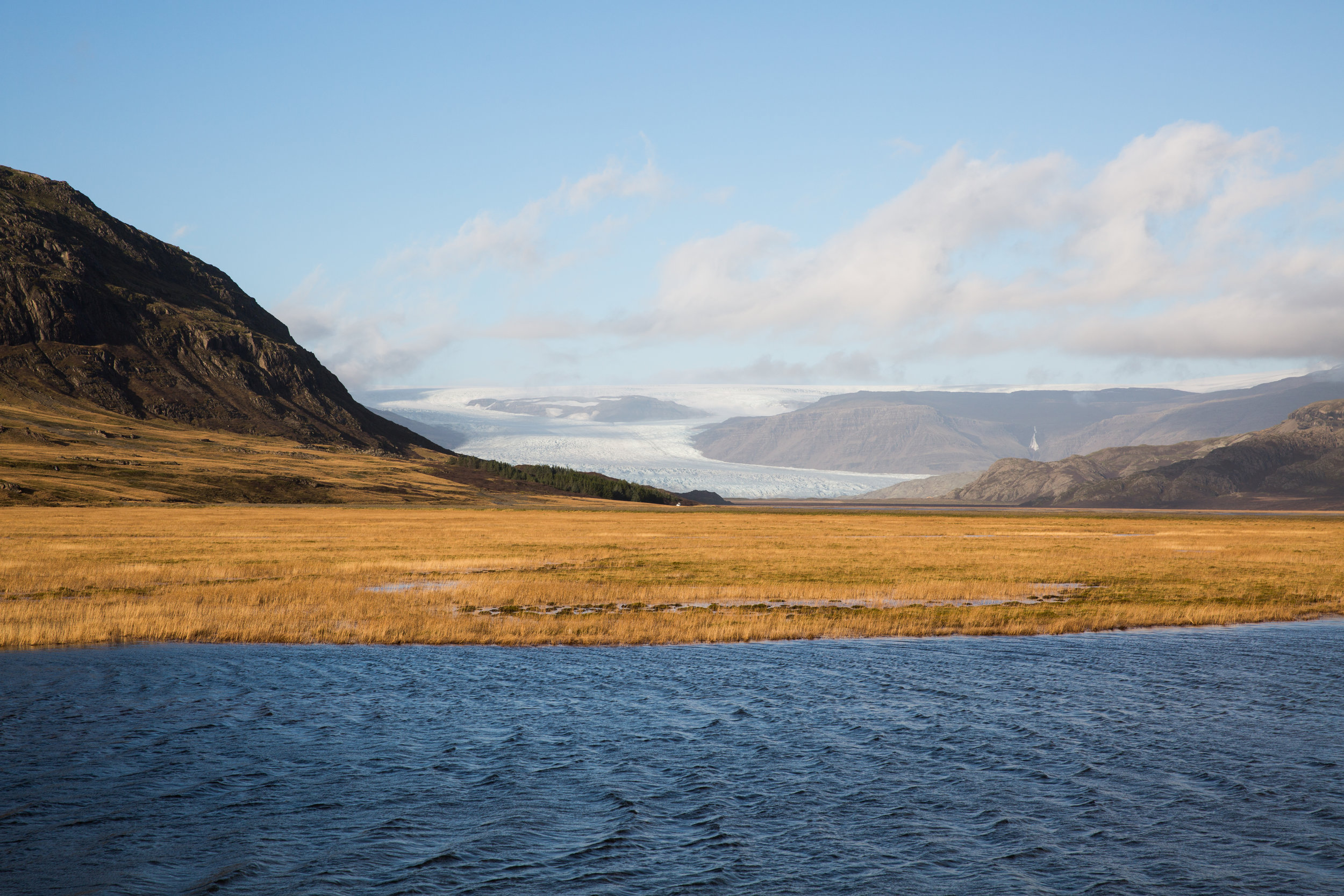
A good time of the road trip, I was already thinking about what I would plan to do on my next trip here. There are several glacier tours that take you into the heart of a glacier, carried out on massive ice crawler vehicles.
Roaming throughout the Icelandic grasslands are their prized sheep. WIth little to worry about besides a GPS locator on their ear, many roam all day and night as they wish.
The history of the Icelandic horse goes back to the 9th century when Norse clans brought them over from the east. While small, they are known for their strength, resilience to cold and disease, with much praise also going to the two specialized gaits they have adapted over time. Riding these beasts is a different horseback experience than many back home may be used to.

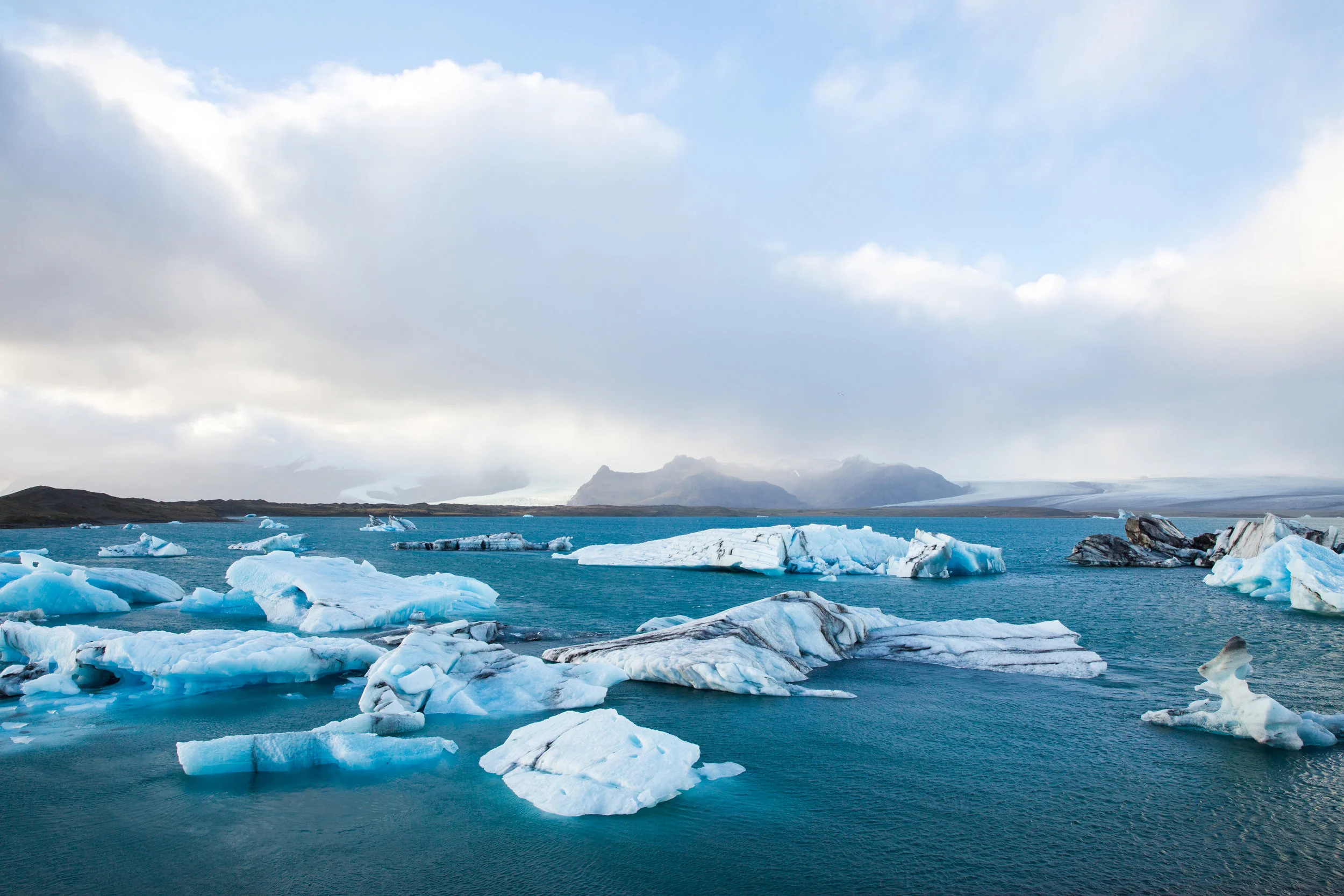
Another alien piece of landscape lies at Jokulsarlon, likely the most breathtaking glacier lagoon you can readily see in Iceland. Amphibious vehicles take visitors around the lagoon regularly, and hosts many movie sets further up the glacier, namely the fight scene between Ra's al Ghul and Bruce Wayne in Batman Begins.
The rumor around here is that the graffiti on the bridge near Jokulsarlon was done by Banksy, but was in fact the art of Norwegian street artist Poble.
My navigator on the treacherous roads of Iceland, and one of my closest friends from California, Jessica the Red.
It's hard to explain the surreal feeling of watching pieces of glacier floating out to sea, and crashing on the waves of a black sand beach. Watching the blue bubbles frozen under the service look like something lives within. Science fiction lovers will be fascinated here.
Halgrimskirkja, located in the center of Reykjavik, is a Lutheran parish church named after the poet and clergyman Hallgrimur Petursson. Commissioned in 1937 by State Architect Guðjón Samúelsson, is was inspired by the basalt lava flows throughout Iceland. Starting in 1945, the church was finally completed in 1986.
German organ builder Johannes Klais of Bonn was choosen to bring his talents to Iceland. With 102 ranks, 72 stops, and 5275 pipes, it is 15 meters tall and weighs in at 25 tons. Construction of it was finished in 1992.
The design and glass of the Harpa Concert and Conference Hall was designed by Danish-Icelandic artist Olafur Eliasson, in tandem with Danish firm Henning Larsen Architects. Before the Icelandic crisis in 2008, it was meant to be part of an area to dubbed the World Trade Center of Iceland. While is stands a beauty, you can no see construction slow starting to resume in the deep pits near the structure.
I had to experience the glory of the original Bæjarins Beztu Pylsur hotdog stand, located in Tryggvagata, Reykjavik. The godsends are made primariliy of lamb, with a beef and pork mixture. The stand has been in continuous operation since 1937. Visited by the likes of Metallica's James Hetfield, President Bill Clinton, it showed up on my radar first in Anthony Bourdain's No Reservations.
The setup: ketchup, sweet mustard, remoulade, crisp fried onions and raw onion. Street food is a must for me in any foreign country.
In many ways, the streets and environs of Reykjavik make for a perfect canvas for the bright street art that covers many parts of the city.
Night coming on quickly on the streets of Reykjavik. Banners to the Icelandic people wave freely throughout the streets.
I really loved spending time in Iceland, and look forward to returning there. The question I often get is how the people are there. I'll say this, for an island nation that pretty much didn't exist to all of you before the volcano eruption in 2010, and has a population of less than 350,000 people who stem from the Vikings, they are very hospitable.
Also take into account that their Prime Minister recently resigned after being caught up in a scandal after revelations in the Panama Papers. There was an emergency election the week we were there, with some of the biggest protests in a country more than a millenia old. Fight is very strong in the island's people.
I enjoyed talking to an AirBNB host known as Snow Bear, whose farm we stayed on during the first few days in the country, mainly because of how blunt his attitude was. Every Icelander has an epic story or family history that they speak proudly of; something I wish I saw more of in everyone.
Thank you to the people of Iceland for allowing us to tour your beautiful country. Next time, we fly, scuba dive and snowmobile in the north to our hearts content.
Below is a gallery of my favorite selections on the journey. Feel free to ask any questions about the trip below or in my contact section.